
Sound Therapy and Its Use in Massage Therapy
Sound Therapy and Its Use in Massage Therapy
An integrative approach to relaxation, nervous system regulation, and client-centered bodywork
Introduction
Sound has long been used as a tool for calming the mind, supporting ritual, and creating a sense of safety. In modern wellness settings, sound therapy refers to the intentional use of music, tone, rhythm, vibration, or guided listening to influence relaxation, mood, attention, and body awareness. For massage therapists, sound can become more than background ambience: when used thoughtfully, it can help shape the treatment environment, support the client’s nervous system, and deepen the overall therapeutic experience.
Massage therapy already works through touch, pressure, rhythm, pacing, and presence. Sound therapy complements these elements because it engages another sensory pathway. Together, touch and sound may encourage clients to settle into slower breathing, reduced muscle guarding, and a more receptive state during bodywork.
What Is Sound Therapy?
Sound therapy is a broad term that may include relaxing music, nature sounds, singing bowls, tuning forks, chimes, gongs, vocal toning, binaural beats, or low-frequency vibration delivered through specialized equipment. Some approaches are simple and environmental, such as choosing calming music during a massage session. Others are more structured, such as sound baths or vibroacoustic techniques that use sustained tones and vibration to create a meditative experience.
It is important to distinguish sound therapy from music therapy. Music therapy is a credentialed health profession delivered by trained music therapists to address specific physical, emotional, cognitive, or social goals. In massage practice, most uses of sound are better described as sound-supported relaxation or integrative sound practices unless the practitioner has formal music therapy credentials.
How Sound May Support the Body During Massage
Sound can influence the massage experience through several practical pathways. Repetitive rhythms and gentle tones may help the client shift attention away from stress and toward the present moment. Calming auditory input may also support the relaxation response, which is associated with slower breathing, reduced heart rate, and decreased physical tension. When vibration is used, the body may perceive sound not only through hearing but also through the skin and tissues.
During massage, these effects can be especially useful because many clients arrive in a heightened stress state. Soothing sound can help signal that the session is a safe, quiet space. As the client relaxes, the therapist may notice softer breathing, less bracing, and improved tolerance for gentle or moderate pressure.
Practical Ways to Use Sound in Massage Therapy
1. Create a Therapeutic Sound Environment
The simplest application is careful music selection. Slow instrumental music, nature sounds, or soft ambient tones can reduce distractions and help clients transition from daily stress into the massage setting. Volume should be low enough to support relaxation without competing with communication between therapist and client.
2. Match Sound to the Session Goal
For a relaxation massage, softer tempos and spacious tones may be appropriate. For restorative or trauma-informed work, predictable and non-startling sounds are usually best. For a client seeking grounding, gentle drumming, ocean sounds, or low sustained tones may help create a steady rhythm. The key is to match the soundscape to the client’s preferences, comfort level, and treatment goals.
3. Use Rhythm to Support Breath and Pace
Massage has its own rhythm. When the therapist’s pacing aligns with calm auditory patterns, the session may feel more cohesive. A therapist might begin with slow effleurage while inviting the client to notice the sound and take a few easy breaths. This can help establish a slower tempo for the bodywork and encourage the client to release unnecessary tension.
4. Integrate Instruments With Clear Boundaries
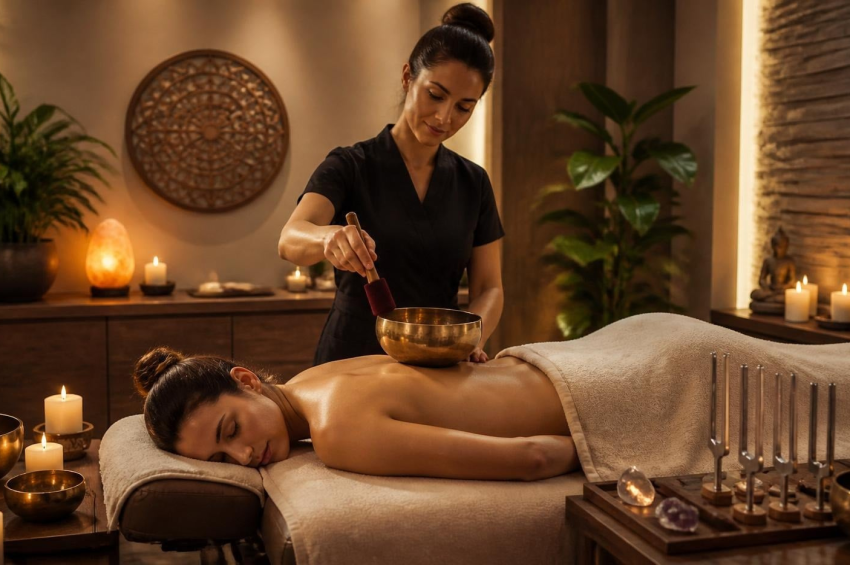
Some practitioners incorporate singing bowls, chimes, tuning forks, or gongs before or after hands-on work. For example, a brief chime at the beginning of a session can mark the transition into stillness, while a soft tone at the end can help the client reorient. Instruments should be used sparingly, professionally, and only with the client’s informed consent.
5. Consider Vibroacoustic Elements When Properly Trained
Vibroacoustic approaches use low-frequency sound vibration through mats, tables, chairs, or devices. In a massage setting, vibration may be experienced as soothing by some clients, but it requires appropriate equipment, training, hygiene procedures, and screening. Therapists should avoid overstating benefits and should stay within their scope of practice.
Benefits for Massage Clients
When used appropriately, sound therapy can support the goals massage therapists commonly pursue: relaxation, stress reduction, improved body awareness, and a more comfortable treatment experience. Research on music-based and sound-based interventions suggests potential benefits for anxiety, pain perception, mood, and relaxation, although the strength of evidence varies by method and population. In practice, sound should be presented as a supportive tool rather than a cure or stand-alone medical treatment.
Clients may benefit most when sound is personalized. Some people relax with soft music, while others prefer silence. Some enjoy singing bowls or nature sounds; others may find them distracting. A client-centered approach respects preference, cultural meaning, sensory sensitivity, and the purpose of the session.
Safety, Ethics, and Scope of Practice
Sound therapy is generally low risk when used gently, but it is not appropriate for every client or every setting. Massage therapists should ask about sound preferences during intake, keep volume moderate, and avoid sudden loud tones. Extra caution may be needed for clients with sound sensitivity, migraines triggered by noise, tinnitus, hearing conditions, seizure disorders, post-traumatic stress responses, or certain neurological conditions. Clients should always be able to request silence or a change in sound at any time.
Ethically, therapists should avoid making unsupported medical claims. Sound can be described as a relaxation aid, grounding tool, or sensory support within the massage session. If a client needs treatment for anxiety, depression, trauma, chronic pain, or another medical condition, sound-supported massage may be part of a broader wellness plan, but it should not replace appropriate medical or mental health care.
Sample Session Flow
A sound-supported relaxation massage might begin with a short intake question: “Do you prefer music, nature sounds, gentle tones, or silence today?” The therapist then starts with low-volume, steady music as the client settles on the table. During the opening strokes, the therapist uses slow pacing and invites natural breathing without forcing a technique. If the client has consented, a soft chime or singing bowl may be used briefly at the beginning or end of the session. After the massage, the therapist checks in about the client’s experience and notes sound preferences for future visits.
Conclusion
Sound therapy can be a valuable complement to massage therapy when it is used with intention, consent, and respect for individual preference. By combining supportive sound with skilled touch, massage therapists can create a multisensory environment that encourages relaxation, grounding, and body awareness. The most effective approach is not necessarily the most elaborate one; it is the one that helps the client feel safe, comfortable, and fully supported throughout the session.
Sources
- National Center for Complementary and Integrative Health. “Music and Health: What the Science Says.” National Institutes of Health, March 2022. https://www.nccih.nih.gov/health/providers/digest/music-and-health-science
- National Center for Complementary and Integrative Health. “Mind and Body Practices.” National Institutes of Health. https://www.nccih.nih.gov/health/mind-and-body-practices
- American Music Therapy Association. “What Is Music Therapy?” https://www.musictherapy.org/about/musictherapy/
- Saskovets, Marina, Zilu Liang, Ian Piumarta, and Irina Saponkova. “Effects of Sound Interventions on the Mental Stress Response in Adults: Protocol for a Scoping Review.” JMIR Research Protocols, 202 https://www.researchprotocols.org/2024/1/e54030
- Fooks, Charlotte, and Oliver Niebuhr. “Effects of Vibroacoustic Stimulation on Psychological, Physiological, and Cognitive Stress.” Sensors, 2024. https://www.mdpi.com/1424-8220/24/18/5924