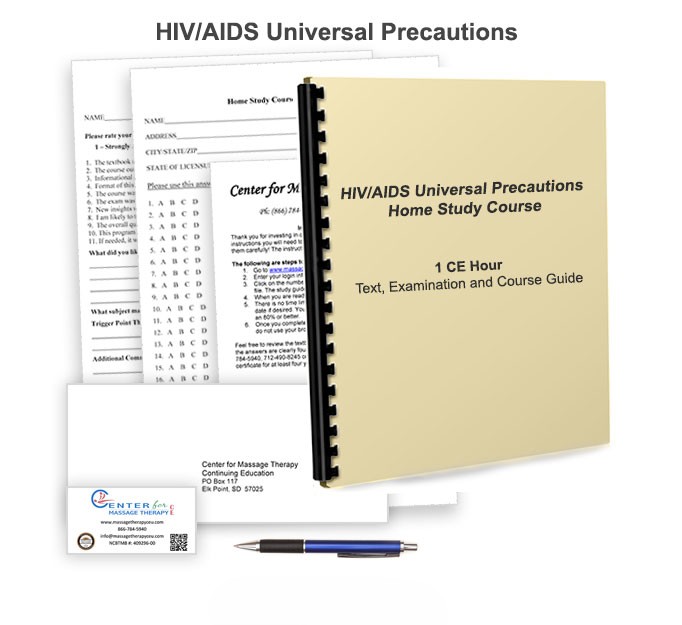
Cost includes all materials. Shipping, if applicable, is a flat rate.
Newly updated in September 2026. This 3 CE-hour course provides massage therapists with a practical understanding of HIV/AIDS, including how HIV affects the immune system, how HIV is transmitted, and how transmission can be prevented. The course covers HIV and AIDS, CD4 cells, viral load, stages of HIV infection, HIV testing and treatment, U=U, PrEP, PEP, and common misconceptions about HIV transmission.
The course also focuses on the massage therapy setting, including infection-control practices, blood and potential occupational exposure, open wounds, bleeding, cleaning and disinfection, client confidentiality, professional communication, scope of practice, and situations in which massage may need to be modified, postponed, or referred. Case examples throughout the course help massage therapists apply these concepts to practical client-care situations.
In This Course, You Will Learn:
The difference between HIV and AIDS and how HIV affects the immune system
How HIV infection can progress and the roles of CD4 count and viral load
How HIV is transmitted and how it is not transmitted
Why ordinary massage and contact with intact skin do not transmit HIV
HIV prevention strategies, including testing, treatment, U=U, PrEP, and PEP
Infection-control practices related to blood, open wounds, bleeding, and potential occupational exposure
Appropriate responses to accidental exposure and situations involving potentially infectious material
How to consider a client's current health, symptoms, medications, skin conditions, and treatment needs when planning massage
Professional communication, confidentiality, and respectful care for clients living with HIV
The massage therapist's scope of practice and when referral to a healthcare professional may be appropriate
Why Take This Course
Massage therapists regularly work in close physical contact with clients, making a clear understanding of communicable disease and infection-control practices an important part of professional practice. This course helps therapists distinguish actual HIV transmission risks from common misconceptions so they can use appropriate precautions without creating unnecessary fear or stigma.
The course also explains how HIV-related health considerations may affect massage therapy. By understanding infection control, occupational exposure, client health considerations, confidentiality, professional boundaries, and scope of practice, massage therapists can make informed decisions about when to provide, modify, postpone, or refer for massage therapy.
Describe HIV and AIDS and explain how HIV affects the immune system.
Explain the roles of CD4 cells, viral load, and HIV treatment.
Identify recognized routes of HIV transmission and situations that do not transmit HIV.
Explain how HIV prevention strategies such as testing, U=U, PrEP, and PEP relate to HIV prevention.
Apply appropriate infection-control practices when blood, open wounds, bleeding, or potential occupational exposure occurs.
Recognize situations in which massage may need to be modified, postponed, or referred.
Describe appropriate professional communication and confidentiality practices when working with a client living with HIV.
Identify the massage therapist's scope of practice when working with clients living with HIV.
Apply course concepts to practical massage therapy situations involving HIV/AIDS and infection control.
Unlimited phone support for course-related questions
The Center for Massage Therapy Continuing Education, LLC is an Approved Provider through the National Certification Board for Therapeutic Massage and Bodywork (NCBTMB); Approved Provider number 409296-00.
Our massage online continuing education courses are also accepted by the American Massage Therapy Association (AMTA), Associated Bodywork and Massage Professionals (ABMP), and most state boards.
For more information on individual state requirements and approvals, please visit our Approvals page and click on your state.
I loved this course it was very informational I learned things I did not know. - Sabrina Weiss
Easy to read, informative, and I answered the test questions while reading which helped with retention. - Katherine B. LMT
Very informative. - Johnny May, LMT
I am better equipped to protect myself and my clients from HIV after having taken this course. - C. Trenton, LMT
The information was much more interesting than I thought. - Sherry Harder, LMT
It was quick, easy and to the point. I have my certificate and CE hours completed in about 3 hours. - Katie Flowers, LMT
Which type of cell is one of the most important types of cells affected by HIV?
A. Red blood cell
B. CD4 cell
C. Platelet
D. Nerve cell
Which of the following is not a route of HIV transmission?
A. Sharing needles or other equipment that may contain infected blood
B. Certain sexual exposures
C. Contact between infectious fluid and broken or damaged skin
D. Touching or hugging a person living with HIV
When blood is present during a massage session, what should the therapist do?
A. Continue the massage if the amount of blood is small.
B. Stop the activity that is causing or exposing the bleeding and address the situation before continuing.
C. Determine whether the client has HIV before taking any action.
D. Clean the blood with bare hands if gloves are not immediately available.
Course Author
About the Instructor
Corrine Rubida, BS, LMT
Corrine completed her massage therapy training at Gateway College of Massage Therapy in 1997 and earned a Bachelor of Science degree in Healthcare Administration in 2012. She has been practicing and teaching massage therapy since 1997 and currently holds a massage therapy license in South Dakota. She is also a member of the ABMP. In 2002, Corrine founded the Center for Massage Therapy CE to make professional massage continuing education courses available both online and by mail. Since then, she has developed more than 100 home-study massage continuing education courses and has taught live courses for AMTA and the Gateway College of Massage Therapy.
.jpg)