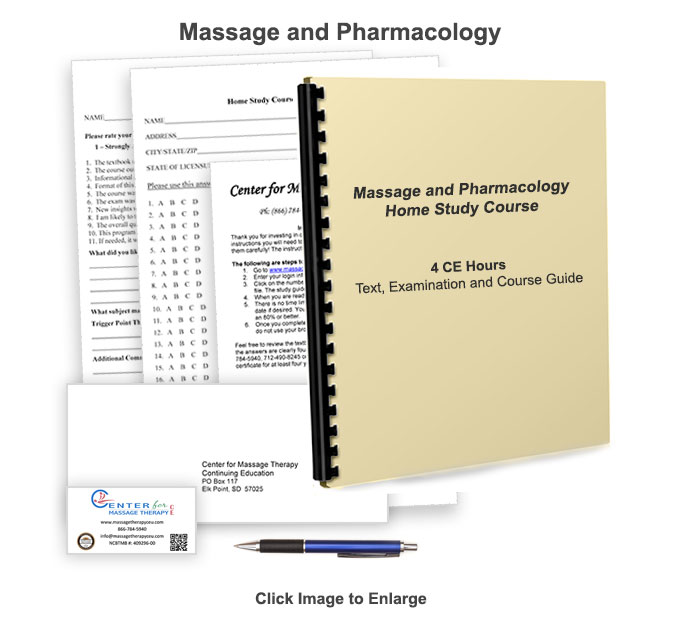
Cost includes all materials. Shipping, if applicable, is a flat rate.
Newly Updated September 2026. Learn how to recognize contraindications, medical precautions, and other safety considerations when providing massage. This 3-hour continuing education course introduces massage therapists to absolute and systemic contraindications, endangerment sites, headaches, client intake, treatment planning, informed consent, professionalism, and SOAP charting.
Whether you are reviewing safe massage practices or looking to strengthen your ability to recognize when massage is appropriate, this course provides practical information to help you determine when massage should be modified or avoided and when referral to another healthcare professional may be appropriate.
In this course, you will learn:
The difference between absolute, systemic, and local contraindications
Common medical precautions related to massage therapy
Endangerment sites and why they require special consideration
Headaches and situations in which massage may or may not be appropriate
How to recognize situations that require modification or avoidance of massage
The importance of client intake and gathering relevant health information
How to develop appropriate massage treatment plans
Informed consent and professional responsibilities
SOAP charting and client documentation
When referral to another healthcare professional may be appropriate
Why take this course?
Recognizing contraindications and medical precautions is an important part of providing safe and responsible massage therapy. Understanding when massage is appropriate, when treatment should be modified, and when a client should be referred can help massage therapists make more informed decisions about client care.
This focused 3-hour course combines safety considerations with practical information about intake forms, treatment planning, informed consent, and documentation. It is a useful option for massage therapists who want to strengthen their knowledge of contraindications and professional decision-making.
Explain the ethical responsibilities of massage therapists related to client safety, autonomy, informed consent, privacy, professional boundaries, non-discrimination, and scope of practice.
Differentiate between contraindications, precautions, local concerns, and systemic concerns and explain how the client's current circumstances can influence massage therapy decisions.
Identify situations in which massage therapy may be appropriate to provide normally, modify, limit to specific areas or techniques, postpone, decline, or refer for additional evaluation.
Recognize common client conditions, symptoms, injuries, and other circumstances that may require treatment modification, avoidance, postponement, or referral while maintaining appropriate professional boundaries.
Identify red flags and other concerning changes that may require a massage therapist to stop or modify treatment, communicate with the client, recommend appropriate evaluation, and document the situation without attempting to diagnose.
Identify anatomical endangerment sites and describe appropriate considerations for pressure, positioning, technique, client feedback, and treatment around vulnerable areas.
Apply ethical principles to client intake, informed consent, communication, confidentiality, documentation, treatment modifications, and referral decisions.
Apply an ethical decision-making framework to massage therapy situations by recognizing concerns, gathering relevant information, assessing safety and scope, deciding on an appropriate response, communicating with the client, and documenting the decision.
Text: Ethics: Contraindications to Swedish Massage by Cindy Hummel, LMT, LPN and Corrine Mollet Rubida, BS, LMT, 106 pages
Course instruction guide
15-question multiple-choice final exam
Course evaluation
Certificate of Achievement upon completion
Unlimited phone support for course-related questions
The Center for Massage Therapy Continuing Education, LLC is an Approved Provider through the National Certification Board for Therapeutic Massage and Bodywork (NCBTMB); Approved Provider number 409296-00.
Our massage online continuing education courses are also accepted by the American Massage Therapy Association (AMTA), Associated Bodywork and Massage Professionals (ABMP), and most state boards.
For more information on individual state requirements and approvals, please visit our Approvals page and click on your state.
I especially liked the printable diagram reflecting the endangerment sites. - Marie Leone
The content was excellent. The format was easy to read and understand. I love the therapist forms provided. The best and most informative ethics course I have ever taken. - Melanie Castillo
I liked the course, it helped me understand and refresh what to look for in my client’s. Thank you. – R. Kublik, LMT
I liked everything about this course and found it easy to navigate through all the information. Thank you for assisting me with my continuing education. - R. Creson, LMT
I like all of the additional information I did not get in school. - Nancy Dudek, LMT
Thanks for providing quality education that is convenient, well organized and helpful. - Mary Batt, LMT
Which of the following describes the term over-treatment?
A. A condition that involves recent onset, sudden change, injury or active episode.
B. A condition that is longstanding or persistent.
C. Assuming that a client cannot receive massage at all when a safer modification or partial treatment may be appropriate.
D. Continuing with a treatment plan even though new information indicates that it should be changed.
Which combination is specifically identified in the course as a concerning headache presentation requiring particular attention?
A. A headache associated with trauma, fever, neck stiffness, or neurological symptoms.
B. A mild headache occurring after a normal workday with no other changes.
C. A familiar headache that follows the client's usual pattern and resolves with rest.
D. A headache that the client has experienced regularly for several years without changes.
A client develops dizziness and lightheadedness during a massage and asks the therapist to continue because the symptoms will "probably pass." What does the course instruct the therapist to do?
A. Stop or modify treatment as appropriate, communicate with the client, reassess the situation, and determine whether treatment can safely continue.
B. Continue treatment because the client has provided informed consent.
C. Diagnose the cause of the dizziness before deciding whether to stop treatment.
D. Ignore the symptom unless the client becomes unable to communicate.
Course Authors
About the Instructors
Cindy Hummel, LMT, LPN
Cindy began her career as a licensed practical nurse in 1990 and then attended massage school in 1998. She has been a licensed massage therapist since 1999. After teaching for 5 years at a local massage school, she practiced massage in a chiropractic setting for over 20 years before retiring in 2023.
Corrine Rubida, BS, LMT
Corrine completed her massage therapy training at Gateway College of Massage Therapy in 1997 and earned a Bachelor of Science degree in Healthcare Administration in 2012. She has been practicing and teaching massage therapy since 1997 and currently holds a massage therapy license in South Dakota. She is also a member of the ABMP. In 2002, Corrine founded the Center for Massage Therapy CE to make professional massage continuing education courses available both online and by mail. Since then, she has developed more than 100 home-study massage continuing education courses and has taught live courses for AMTA and the Gateway College of Massage Therapy.

.jpg)