Cost includes all materials. Shipping, if applicable, is a flat rate.
Learn how sensory processing, communication differences, and environmental factors can affect a client's experience of massage therapy. This 2-hour continuing education course introduces massage therapists to sensory-informed practice, neurodiversity, common sensory patterns, and practical considerations for working with sensory-sensitive and neurodivergent adults.
The course explores adaptations to the massage environment, intake process, communication, informed consent, scheduling, pressure, pacing, transitions, and hands-on sessions. It also addresses sensory overwhelm, masking, alternative communication, support persons, professional boundaries, scope of practice, and situations where referral or collaboration with another professional may be appropriate.
In this course, you will learn:
The neurodiversity framework and respectful language for discussing neurodivergence
The major sensory systems and common sensory processing patterns
How sensory differences may affect a client's experience of massage
Environmental, intake, communication, and scheduling considerations
Ways to adapt communication and informed consent to support client autonomy
Strategies for adapting pressure, pacing, touch, sequencing, and transitions
How to recognize and appropriately respond to sensory overwhelm
Considerations for masking, alternative communication, and support persons
How to maintain professional boundaries and remain within massage therapy scope of practice
When referral or collaboration with other qualified professionals may be appropriate
Why take this course?
Massage therapists may work with clients who have sensory sensitivities, neurodivergent traits, or individual communication needs that are not immediately apparent. Understanding how these differences can affect the massage experience can help therapists reduce unnecessary barriers, communicate more clearly, and create a practice environment that supports meaningful consent and client choice.
This focused 2-hour ethics course provides practical strategies that can be incorporated into an existing massage practice without diagnosing or treating a condition. It is a useful option for massage therapists who want to strengthen ethical communication, informed consent, accessibility, and client-centered care while maintaining appropriate professional and scope-of-practice boundaries.
Describe the neurodiversity framework and use respectful, current language when communicating with and about neurodivergent clients.
Explain the major sensory systems relevant to massage practice and recognize common patterns of sensory over-responsivity, under-responsivity, and sensory seeking.
Identify sensory and communication barriers within the massage environment, intake process, scheduling, and session structure and apply appropriate adaptations.
Adapt communication and informed consent practices for clients who may use literal language, require additional processing time, communicate nonverbally, or experience masking.
Apply sensory-informed hands-on adaptations, including appropriate pressure, pacing, predictable sequencing, warned transitions, and strategies for responding to sensory overwhelm.
Maintain client autonomy, safety, and professional boundaries while recognizing situations that require referral, collaboration, or additional professional support.
Distinguish sensory-informed massage adaptations from diagnosis or treatment of a condition and describe these services accurately within massage therapy scope of practice.
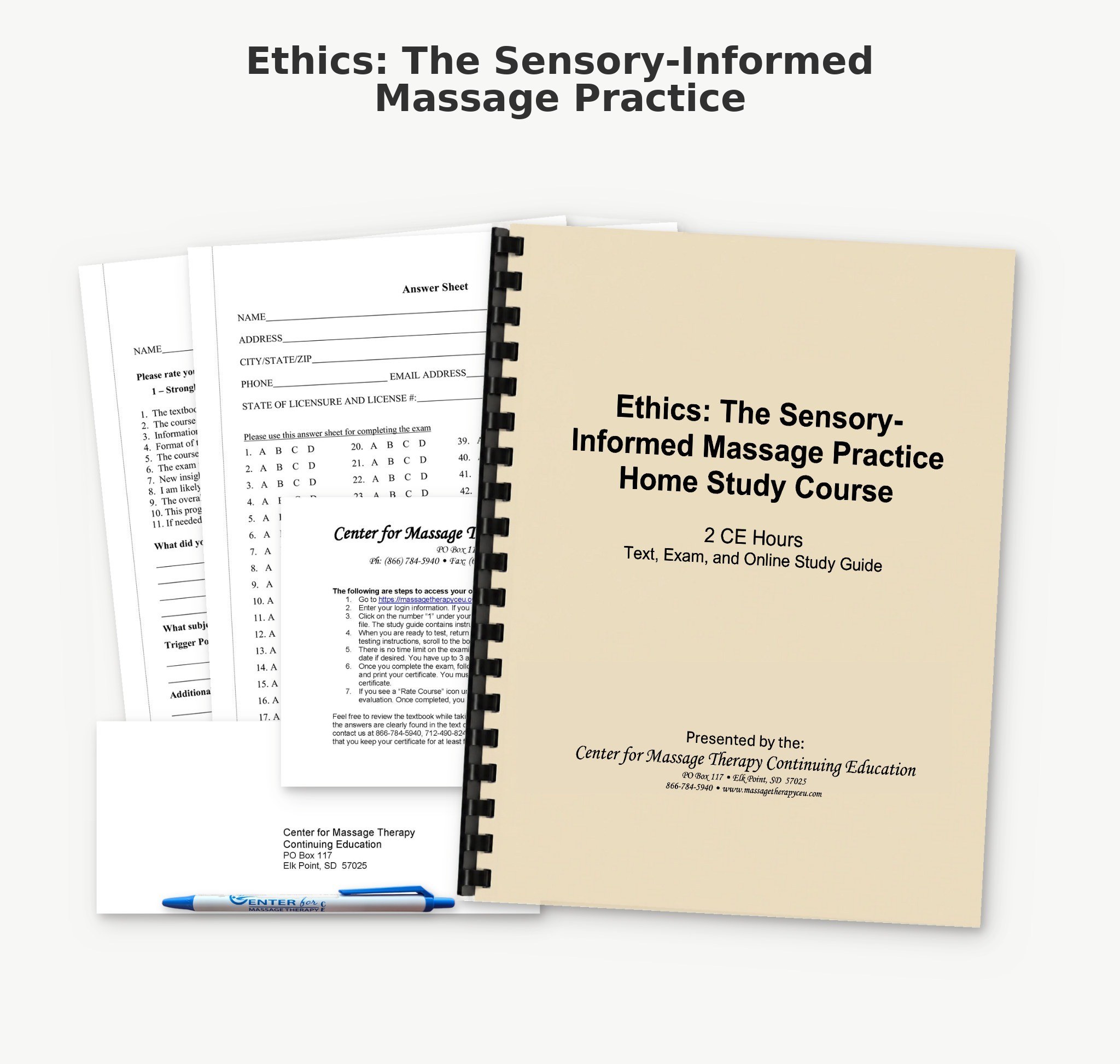
Text: Ethics: The Sensory-Informed Massage Practice by Meg Sherwood, LMT, MBA, 60 pages
Course instruction guide
15-question multiple-choice final exam
Course evaluation
Certificate of Achievement upon completion
Unlimited phone support for course-related questions
The Center for Massage Therapy Continuing Education, LLC is an Approved Provider through the National Certification Board for Therapeutic Massage and Bodywork (NCBTMB); Approved Provider number 409296-00.
Our massage online continuing education courses are also accepted by the American Massage Therapy Association (AMTA), Associated Bodywork and Massage Professionals (ABMP), and most state boards.
For more information on individual state requirements and approvals, please visit our Approvals page and click on your state.
New Course...Comming Soon.
What is neurodiversity?
(A) The observation that human brains vary, as bodies do, and that this variation is a natural feature of the species rather than a collection of defects
(B) Developmental differences characterized by differences in social communication and interaction alongside focused interests, preference for routine and predictability, and sensory processing differences
(C) Differences in attention regulation, executive function, and often sensory processing and interoception
(D) A chronic pain syndrome which produces heightened sensory sensitivity
What is the best pressure, pace, and contact adaptations for clients reporting tactile sensitivity?
(A) Begin with moderate-to-firm broad pressure and earn the right to any lighter or finer work later
(B) Keep pace quick; slow speed is arousal
(C) Prefer point tools (thumbs, fingertips) over broad tools (palms, forearms)
(D) Never use sustained static compression
A massage therapist adapting sessions for an autistic client is:
(A) Providing autism therapy: adjustable environment, communication and pressure adaptations, and predictable sessions
(B) Doing sensory integration: adjustable environment, communication and pressure adaptations, and predictable sessions
(C) Treating sensory processing disorder: adjustable environment, communication and pressure adaptations, and predictable sessions
(D) Offering sensory-considerate massage: adjustable environment, communication and pressure adaptations, and predictable sessions
Course Author
About the Instructor
Meg Sherwood, LMT, MBA
Meg Sherwood, LMT, MBA, is uniquely positioned to teach this material: a licensed massage therapist with twelve years of full-time practice followed by continuing per-diem work, and a Certified Occupational Therapy Assistant specializing in pediatric fine motor and sensory development, the clinical field in which sensory processing frameworks are applied every working day. As a clinical fieldwork educator for occupational therapy assistant students and a multi-state licensee, Meg has spent a career translating sensory science into hands-on practice, and this course is that translation offered to the massage profession: the sensory knowledge of one discipline, delivered to the hands of another, on behalf of the clients both professions exist to serve.