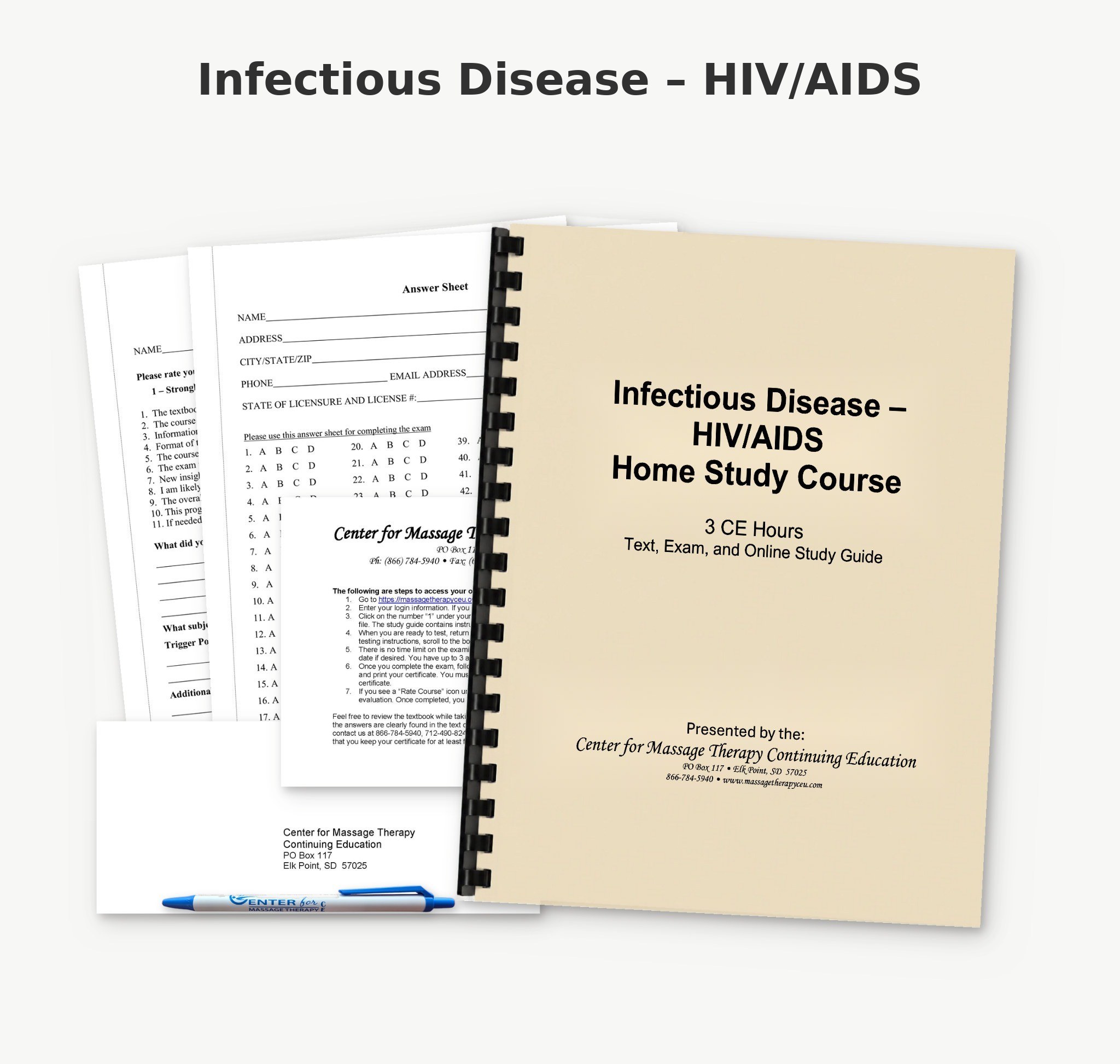
This 3 CE-hour continuing education course provides massage therapists with a practical understanding of HIV/AIDS, including how HIV affects the immune system, how transmission occurs, and how HIV is prevented. The course also addresses current treatment concepts, including antiretroviral therapy, viral suppression, and U=U.
The course focuses on the practical considerations of working with clients who have HIV, including health history, medications, fatigue, neuropathy, pain, skin and tissue concerns, swelling, infection, blood exposure, and when massage should be modified, postponed, or followed by medical referral. Professional responsibilities related to Standard Precautions, confidentiality, informed consent, stigma, scope of practice, and occupational exposure are also addressed.
In This Course, You Will Learn:
- The difference between HIV and AIDS and how HIV affects the immune system
- The roles of CD4 cells and viral load in HIV infection
- How HIV is transmitted and how it is not transmitted
- Standard Precautions and infection-control practices relevant to massage therapy
- HIV prevention, including PrEP, PEP, and U=U
- How HIV medications and related health effects may influence massage therapy
- Massage considerations for fatigue, neuropathy, pain, skin concerns, swelling, and infection
- When to modify, postpone, stop, or refer a client for medical evaluation
- Professional responsibilities involving confidentiality, informed consent, stigma, boundaries, and scope of practice
- How to respond appropriately to a potential occupational exposure to HIV
Why Take This Course?
Massage therapists may work with clients who have HIV and need accurate information to provide safe, professional, and appropriate care. HIV status alone does not automatically prevent a client from receiving massage, making it important for therapists to understand the difference between the diagnosis itself and the client's current health and individual circumstances.
This course helps massage therapists replace outdated misconceptions with practical knowledge they can apply in everyday practice. It emphasizes individualized assessment, Standard Precautions, appropriate communication, recognition of health concerns, and knowing when massage should be modified or when medical evaluation may be appropriate.
The Center for Massage Therapy Continuing Education, LLC is an Approved Provider through the National Certification Board for Therapeutic Massage and Bodywork (NCBTMB); Approved Provider number 409296-00.
Our massage online continuing education courses are also accepted by the American Massage Therapy Association (AMTA), Associated Bodywork and Massage Professionals (ABMP), and most state boards.
For more information on individual state requirements and approvals, please visit our Approvals page and click on your state.
What is the primary difference between a CD4 count and a viral load?
A. CD4 count measures the amount of HIV in the blood, while viral load measures immune function.
B. CD4 count measures medication effectiveness, while viral load measures symptoms.
C. CD4 count provides information about immune function, while viral load measures the amount of HIV in the blood.
D. CD4 count and viral load measure the same thing.
A massage therapist experiences a potential occupational exposure to HIV. What is the most appropriate response?
A. Clean or flush the affected area, report the exposure, obtain immediate medical evaluation, and discuss PEP with a healthcare professional when appropriate.
B. Assume transmission has occurred and begin treatment independently.
C. Wait to see whether symptoms develop.
D. Determine independently whether PEP is necessary.
Another client asks a massage therapist whether a particular client has HIV. What is the most appropriate response?
A. Confirm the information if the client already seems to know.
B. Explain the client's HIV status because it is relevant to infection control.
C. Say, “I can't discuss another client's health information.”
D. Tell the other client to ask the person directly.