Cost includes all materials. Shipping, if applicable, is a flat rate.
Learn the fundamentals of Craniosacral Therapy (CST) and explore the principles behind this gentle, hands-on approach to bodywork. This 10-hour continuing education course introduces massage therapists to the history of CST, its underlying theories, the craniosacral system, palpation techniques, and what to expect during a craniosacral therapy session.
Whether you are new to Craniosacral Therapy or looking to expand your knowledge of complementary massage therapy techniques, this course provides an introduction to the principles and techniques of CST. The course includes instructional materials and more than two hours of video demonstrating craniosacral techniques and a sample whole-body routine.
In this course, you will learn:
The history and development of Craniosacral Therapy
The definition and fundamental principles of CST
The theories behind Craniosacral Therapy
How the craniosacral system is traditionally understood to function
Palpation techniques and exercises used in CST
What to expect during a craniosacral therapy session
How CST relates to other complementary healing approaches
Practical craniosacral techniques demonstrated through instructional video
Considerations for incorporating CST knowledge into massage therapy practice
Why Take This Course?
Craniosacral Therapy offers massage therapists an opportunity to explore a gentle approach to hands-on bodywork and expand their knowledge of complementary techniques. Understanding the principles, theories, and techniques associated with CST can provide a foundation for continued study in this specialized area.
Whether you are interested in learning a new modality, exploring craniosacral techniques, or expanding your continuing education, this course provides a convenient introduction to Craniosacral Therapy through textbook instruction, practical exercises, and instructional video.
Describe the history and fundamental principles of Craniosacral Therapy.
Explain the primary theories underlying CST.
Describe how the craniosacral system is traditionally understood to function.
Identify basic palpation techniques and exercises used in CST.
Describe what may occur during a typical craniosacral therapy session.
Identify ways CST relates to other complementary healing approaches.
Recognize basic craniosacral techniques demonstrated through instructional materials and video.
Explain how continued education and training can support further study of Craniosacral Therapy.
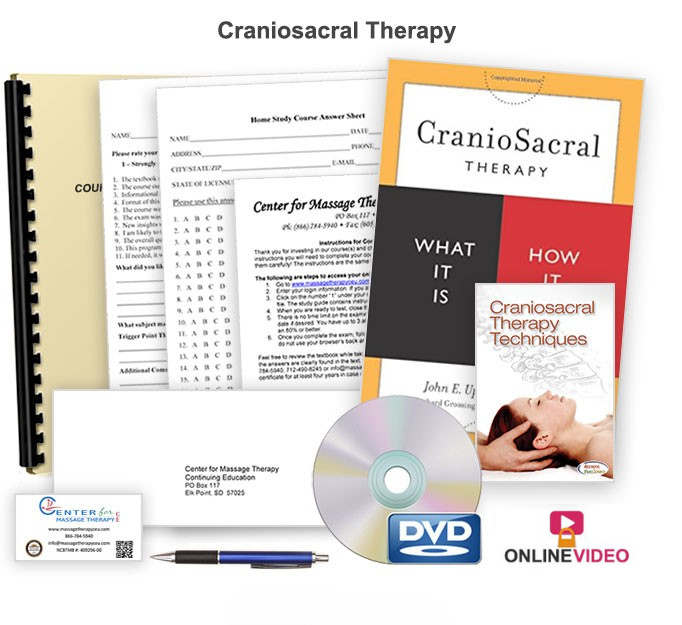
Text: Craniosacral Therapy: What It Is, How It Works by John E. Upledger, 119 pages
Video: Craniosacral Therapy Techniques instructional video with John Hoffmann, approx. 2 hours 30 minutes
Course instruction guide
60-question multiple-choice final exam
Course evaluation
Certificate of Achievement upon completion
Unlimited phone support for course-related questions
The Center for Massage Therapy Continuing Education, LLC is an Approved Provider through the National Certification Board for Therapeutic Massage and Bodywork (NCBTMB); Approved Provider number 409296-00.
Our online massage continuing education courses are also accepted by the American Massage Therapy Association (AMTA), Associated Bodywork and Massage Professionals (ABMP), and most state boards.
For more information on individual state requirements and approvals, please visit our Approvals page and click on your state.
I'm very impressed with the quality of the instruction in the video, and the study book. Both are wonderful, super easy to follow along with, and very well written! Worth every penny and so much more! - D.Sagastume, LMT
I liked the extensive and detailed history of cst provided within the book. The stories were impactful and meaningful, and provided a "real feel" to the modality. - Daniel Militello
I really enjoyed how the book breaks everything down including the history, defining terminology and giving examples and diagrams to appeal to different learning styles. - Charlotta Davis
Very interesting and valuable for giving you enough information to decide to go on further in this field. - Colette Foster, LMT
I liked that it includes a DVD and textbook. - J. Keegan, LMT
Very detailed information. - Ashley Johnson, LMT
I really enjoyed learning about craniosacral therapy and I am interested to learn more and explore the scope of this practice. It's very interesting. - Jennifer Leombruni, LMT
How many cycles per minute does the craniosacral system rhythmically pump cerebrospinal fluid through the brain, spinal cord and component cells?
A. 1-3
B. 3-6
C. 6-12
D. 10-20
Why is CST such an excellent preventative medicine modality?
A. It immobilizes natural defenses rather than focusing on the etiological agents of disease
B. It mobilizes natural defenses rather than focusing on the etiological agents of disease
C. It focuses on treating the symptomatology rather than focusing on preventative medicine
D. It focuses on the etiological agents of disease rather than mobilizing the body’s natural defenses
As usually practiced, the CST treatment process requires an uninterrupted treatment session of at least:
A. 30 minutes
B. 15 minutes
C. 10 minutes
D. 5 minutes
Course Authors
About the Instructors
Corrine Rubida, BS, LMT
Corrine completed her massage therapy training at Gateway College of Massage Therapy in 1997 and earned a Bachelor of Science degree in Healthcare Administration in 2012. She has been practicing and teaching massage therapy since 1997 and currently holds a massage therapy license in South Dakota. She is also a member of the ABMP. In 2002, Corrine founded the Center for Massage Therapy CE to make professional massage continuing education courses available both online and by mail. Since then, she has developed more than 100 home-study massage continuing education courses and has taught live courses for AMTA and the Gateway College of Massage Therapy.
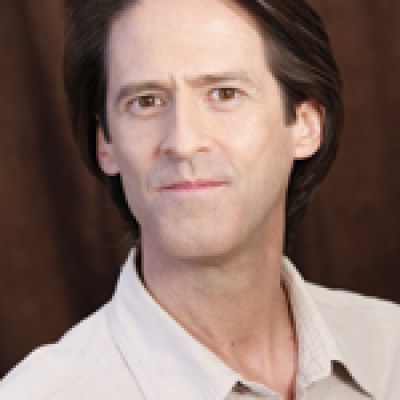
John Hoffmann, CMT
John Hoffmann is a certified massage therapist, practicing in the Los Angeles area for over 15 years. He completed his massage therapy studies at the Institute of Psycho-Structural Balancing in California. His training is in myofascial release, craniosacral therapy, advanced circulatory techniques, trigger point therapy, foot reflexology, emotional dynamics of the body, acupressure, neuro-muscular re-education, sensory re-patterning, and deep tissue massage. He is the featured expert in the Myofascial Release Techniques and award-winning Craniosacral Therapy Techniques instructional videos. He’s worked in chiropractic offices, as well as massage spas.