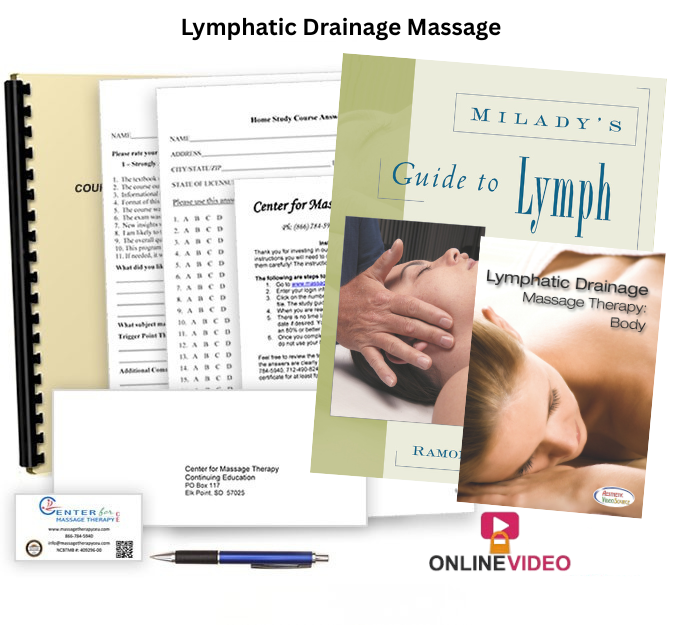
Cost includes all materials. Shipping, if applicable, is a flat rate.
Learn the fundamentals of lymphatic drainage massage (LDM) and develop a foundation for understanding the lymphatic system and its role in the body. This 8-hour continuing education course introduces massage therapists to the anatomy and functions of the lymphatic system, immunity, edema, indications and contraindications, client assessment, basic lymphatic drainage strokes, and self-massage techniques.
Whether you are new to lymphatic drainage massage or looking to expand your knowledge of this specialized technique, this course provides practical information to help you understand the principles and basic applications of LDM. The course also covers when referral to a physician may be appropriate and includes instruction for a basic lymphatic drainage massage routine.
In this course, you will learn:
The anatomy and functions of the lymphatic system
The relationship between the lymphatic system, immunity, and edema
The fundamental principles of lymphatic drainage massage
Indications, contraindications, and safety considerations for LDM
What information to gather during an initial client interview
Basic lymphatic drainage massage strokes and techniques
How to perform a basic lymphatic drainage massage routine
When referral to a physician may be appropriate
Basic self-massage techniques using lymphatic drainage principles
Why take this course?
Understanding the lymphatic system and the principles of lymphatic drainage can help massage therapists make more informed decisions when working with clients who may benefit from this specialized approach. Knowledge of contraindications, client assessment, and referral considerations is especially important when working with conditions involving edema or the lymphatic system.
This 8-hour course provides a focused introduction to lymphatic drainage massage, combining anatomy and physiology with practical techniques, a basic massage routine, and self-care applications. It is a useful option for massage therapists who want to expand their knowledge of lymphatic techniques or build a foundation for further study.
Describe the structure and primary functions of the lymphatic system.
Explain the relationship between lymphatic function, immunity, and edema.
Describe the fundamental principles and characteristics of lymphatic drainage massage.
Identify indications, contraindications, and safety considerations for LDM.
Identify relevant information to gather during an initial client assessment.
Describe basic lymphatic drainage strokes and their appropriate application.
Recognize situations in which referral to a physician or other healthcare professional may be appropriate.
Apply foundational LDM principles to a basic massage routine and client self-massage instruction.
Text: The Complete Guide to Lymph Drainage Massage by Ramona Moody French, 194 pages
Course instruction guide
40-question multiple-choice final exam
Course evaluation
Certificate of Achievement upon completion
Unlimited phone support for course-related questions
The Center for Massage Therapy Continuing Education, LLC is an Approved Provider through the National Certification Board for Therapeutic Massage and Bodywork (NCBTMB); Approved Provider number 409296-00.
Our massage online continuing education courses are also accepted by the American Massage Therapy Association (AMTA), Associated Bodywork and Massage Professionals (ABMP), and most state boards.
For more information on individual state requirements and approvals, please visit our Approvals page and click on your state.
Loved the ease of this course. It presented useful information that I can use right away! - Jeremy Ohla, LMT
I liked that the exam questions followed in order of the textbook. It was well organized and to the point. - Rhonda Grasz
My textbook arrived in 3 days! The material was current and relevant to my practice. - Xian Liu
What is lymph drainage massage (LDM)?
A. A gentle, rhythmic style of massage that mimics the action of the lymphatic system, uses precise rhythm and pressure to open the initial lymphatics and stimulate lymph vessel contraction to reduce edema
B. A firm, intermittent style of massage that mimics the action of the lymphatic system, uses precise rhythm and pressure to open the initial lymphatics and stimulate lymph vessel contraction to reduce edema
C. A gentle, rhythmic style of massage that mimics the action of the circulatory system, uses precise rhythm and pressure to open the initial capillaries and stimulate blood vessel contraction to reduce edema
D. A firm, intermittent style of massage that mimics the action of the circulatory system, uses precise rhythm and pressure to open the initial capillaries and stimulate blood vessel contraction to reduce edema
All of the following are basic principles of LDM EXCEPT:
A. Success depends on moving the deeper musculature rather than the skin
B. The most effective pressure for LDM is between one half ounce and eight ounces per square inch
C. Move lymph toward the lymph nodes in the neck, axilla, and the groin
D. Slow, smooth, rhythmic movements are essential for success
The lateral axillary nodes (brachial nodes) drain the:
A. Skin and superficial fascia of the upper arms
B. Upper arms
C. Back of the neck, upper back, scapular muscles
D. Ulnar side of the forearm and hand
Course Author
About the Instructor
Corrine Rubida, BS, LMT
Corrine completed her massage therapy training at Gateway College of Massage Therapy in 1997 and earned a Bachelor of Science degree in Healthcare Administration in 2012. She has been practicing and teaching massage therapy since 1997 and currently holds a massage therapy license in South Dakota. She is also a member of the ABMP. In 2002, Corrine founded the Center for Massage Therapy CE to make professional massage continuing education courses available both online and by mail. Since then, she has developed more than 100 home-study massage continuing education courses and has taught live courses for AMTA and the Gateway College of Massage Therapy.