
Massage Therapy Contraindications: When Should Massage Be Avoided?
Massage Therapy Contraindications: When Should Massage Be Avoided?
Massage therapy is generally considered a low-risk practice when performed by a properly trained massage therapist. However, there are situations in which massage should be avoided, postponed, modified, or performed only with appropriate medical guidance.
Understanding massage therapy contraindications is an essential part of safe clinical practice. A massage therapist must be able to recognize conditions that may make massage inappropriate, identify areas that should not be treated, and determine when a client should be referred to another healthcare professional.
A contraindication does not always mean that a client can never receive massage. In many situations, the therapist may be able to modify the technique, pressure, positioning, treatment area, or timing of the session. The appropriate decision depends on the client's condition, symptoms, medications, treatment status, and the type of massage being performed.
What Is a Contraindication to Massage Therapy?
A contraindication is a condition or circumstance in which a particular treatment may be unsafe or may increase the risk of harm.
Massage contraindications are commonly divided into two categories:
- Absolute contraindications: Situations in which massage should generally not be performed because of a significant risk of harm.
- Relative contraindications: Situations in which massage may still be appropriate, but the therapist should modify the treatment, avoid certain areas, use additional precautions, or obtain medical clearance when appropriate.
It is also useful to distinguish between a general contraindication and a local contraindication.
A general contraindication may mean that massage should be postponed altogether. A local contraindication may mean that massage can be performed on other areas of the body while avoiding the affected area.
For example, a healing surgical incision may not prevent a client from receiving massage, but the incision and surrounding tissues may need to be avoided until they have adequately healed.
When Should Massage Be Avoided?
Massage should generally be postponed when a client has an acute condition that could be worsened by treatment or could put the therapist or other clients at risk.
Examples include:
- Fever or an acute systemic infection
- Certain contagious illnesses
- Acute inflammation
- Active bleeding
- A new or open wound
- Suspected deep vein thrombosis
- Certain acute injuries
- Unstable medical conditions
- Situations in which the client needs immediate medical evaluation
Massage should not be used to delay appropriate medical care. If a client presents with unexplained or potentially serious symptoms, referral to a qualified healthcare professional is appropriate. The National Center for Complementary and Integrative Health also advises that massage should not be used to postpone evaluation of a medical problem.
Deep Vein Thrombosis and Blood Clots
One of the most important contraindications massage therapists should recognize is deep vein thrombosis (DVT).
A DVT is a blood clot that typically develops in a deep vein, most commonly in the leg. Massage should not be performed over an area where a DVT is suspected or diagnosed because manipulating the area may pose a serious risk.
Possible symptoms of DVT can include:
- Swelling in one leg
- Leg pain or tenderness
- Warmth
- Redness or discoloration
- Unexplained discomfort in the calf or thigh
A massage therapist should not attempt to diagnose DVT. If a client presents with symptoms that could indicate a blood clot, massage should be postponed and the client should be referred for appropriate medical evaluation.
Fever and Acute Infection
Massage should generally be postponed when a client has a fever or an acute systemic infection.
The body's resources are already being used to respond to illness, and massage may be inappropriate while the client is acutely ill. There may also be concerns about transmitting an infectious condition to the massage therapist or other clients.
Massage should also be avoided directly over areas of active infection, including infected skin or tissue.
Once the acute illness has resolved, the therapist can reassess whether massage is appropriate.
Open Wounds, Burns, and Damaged Skin
Massage should not be performed directly over:
- Open wounds
- Fresh surgical incisions
- Significant burns
- Active skin infections
- Areas with compromised or fragile skin
- Fresh abrasions
- Areas that are actively bleeding
Pressure and friction can further damage compromised tissue and may interfere with healing.
This does not necessarily mean that the entire massage session must be canceled. Depending on the situation, the therapist may be able to treat unaffected areas while avoiding the affected tissue.
The NCCIH specifically advises that massage should not be performed over potentially weak areas of skin, such as wounds.
Recent Surgery
Massage may need to be postponed or substantially modified following surgery.
The appropriate timing depends on the type of procedure, location of the surgery, healing status, complications, and instructions from the client's healthcare team.
Massage therapists should avoid applying pressure directly over a healing surgical site unless they have appropriate training and authorization to work with that type of postoperative condition.
A client who recently underwent surgery should be encouraged to follow the recommendations of their healthcare provider before beginning or returning to massage therapy.
Fractures and Unhealed Injuries
Massage should not be performed directly over an acute fracture or an area where a bone has not adequately healed.
The therapist should also use caution with acute injuries involving significant swelling, inflammation, tissue damage, or unexplained pain.
Once an injury has progressed into an appropriate stage of healing, massage may sometimes be incorporated into a treatment plan. However, the techniques and pressure should be appropriate for the condition and the therapist's scope of practice.
Bleeding Disorders and Blood-Thinning Medications
Clients with bleeding disorders or those taking anticoagulant medications may require significant modifications to massage.
Forceful or deep tissue massage can increase the risk of bruising or other tissue injury in individuals who have impaired clotting or who are taking medications that affect blood clotting.
The NCCIH specifically notes that people with bleeding disorders, thrombocytopenia, or those taking anticoagulant medications should avoid forceful and deep tissue massage.
This does not necessarily mean that every client taking a blood thinner must avoid all massage. Instead, the therapist should understand the potential risks, avoid unnecessarily aggressive techniques, and seek appropriate medical guidance when necessary.
Thrombocytopenia
Thrombocytopenia refers to a low platelet count. Because platelets play an important role in blood clotting, individuals with thrombocytopenia may have an increased risk of bruising or bleeding.
Massage therapists should use caution with clients who have low platelet counts and should avoid aggressive or deep pressure when it could increase the risk of tissue injury.
Depending on the severity of the condition and the client's medical circumstances, medical clearance may be appropriate before treatment.
Cancer and Massage Therapy
Cancer is an area where massage contraindication information requires particular care.
A diagnosis of cancer does not automatically mean that a person can never receive massage. Massage therapy is used in some cancer care settings to help address symptoms such as pain, stress, anxiety, and fatigue.
However, treatment may need to be modified significantly depending on the type and location of cancer, current treatment, surgical history, medications, blood counts, bone health, and other medical factors.
Massage should generally be avoided directly over areas of known tumor involvement and areas affected by recent surgery or radiation treatment unless the therapist has appropriate oncology massage training and the treatment is specifically appropriate.
Memorial Sloan Kettering Cancer Center recommends avoiding massage over areas of tumor involvement, recent radiotherapy and surgery, and certain implanted devices or vulnerable areas.
Massage therapists interested in working with clients with cancer should obtain appropriate education rather than relying on a simple list of contraindications.
For additional education, see our course Cancer and Massage Therapy.
Pregnancy
Pregnancy does not automatically prohibit massage therapy, but it may require modifications based on the stage of pregnancy and the client's individual health status.
Massage therapists should use appropriate positioning and techniques and recognize situations in which pregnancy may be considered high risk.
Clients with pregnancy-related complications should be referred to their healthcare provider for guidance regarding whether massage is appropriate.
The NCCIH notes that pregnant women may need to avoid some types of massage and should consult their healthcare providers when appropriate.
Cardiovascular Conditions
Some cardiovascular conditions may require modifications or medical clearance before massage.
Examples include:
- Uncontrolled hypertension
- Recent heart attack
- Certain forms of heart failure
- Certain vascular disorders
- Known aneurysms
- Other unstable cardiovascular conditions
Massage therapists should not attempt to manage an unstable cardiovascular condition through massage.
When a client's medical status is unclear, referral to the client's healthcare provider is the safer approach.
Osteoporosis and Fragile Bones
Clients with severe osteoporosis or significantly reduced bone density may be more susceptible to fractures.
Deep pressure, aggressive techniques, and techniques that place excessive force on vulnerable structures may be inappropriate.
The massage therapist should consider the severity of the condition, areas affected, the client's fracture history, and the type of massage being performed.
When appropriate, treatment may need to emphasize gentle techniques and careful positioning rather than deep or forceful work.
Neurological Conditions and Loss of Sensation
Some neurological conditions can affect sensation, strength, coordination, or the client's ability to accurately report pressure. This can create additional safety considerations during massage. For example, a client with reduced sensation may not be able to recognize excessive pressure or tissue irritation as quickly as someone with normal sensation.
Massage therapists should adjust their approach based on the client's functional abilities and medical status and should avoid treating beyond their training or scope of practice.
When Should Massage Be Modified Instead of Avoided?
One of the most important skills for a massage therapist is recognizing that contraindications are not always an all-or-nothing decision.
In some cases, massage can be modified by:
- Reducing pressure
- Avoiding deep tissue techniques
- Avoiding a specific body region
- Shortening the treatment
- Changing the client's position
- Using gentler techniques
- Avoiding heat or other adjunctive techniques
- Postponing treatment until an acute condition resolves
- Obtaining medical clearance
- Referring the client to an appropriate healthcare professional
For example, a client taking anticoagulant medication may not necessarily need to avoid all massage, but forceful and deep tissue techniques may be inappropriate.
This is why massage therapists should evaluate the individual client rather than relying solely on a checklist of conditions.
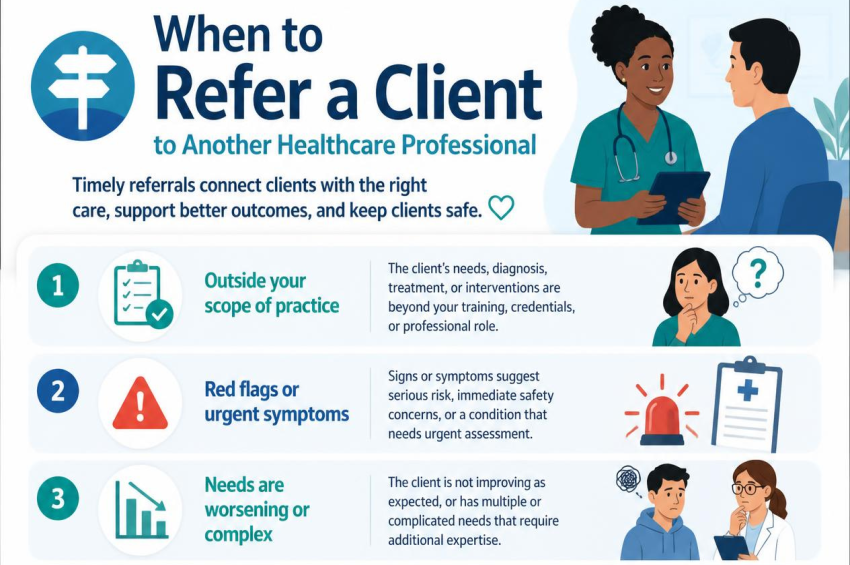
Red Flags That Should Prompt Referral
Massage therapists should recognize symptoms that may indicate a condition requiring medical evaluation.
Examples of red flags include:
- Sudden or unexplained severe pain
- Unexplained swelling
- Sudden shortness of breath
- Chest pain
- Significant unexplained weakness
- New neurological symptoms
- Unexplained bleeding
- Fever accompanied by concerning symptoms
- Suspected blood clot
- A rapidly changing or unexplained mass
- An injury that appears more serious than a typical soft-tissue problem
A massage therapist's role is not to diagnose these conditions. The therapist's responsibility is to recognize when the client's presentation falls outside the appropriate scope of massage therapy and make an appropriate referral.
Why Client Intake and Assessment Matter
A thorough intake process is one of the best ways to identify potential contraindications before beginning treatment.
A massage therapist should obtain information about:
- Current health concerns
- Medications
- Recent surgeries
- Recent injuries
- Chronic medical conditions
- Pregnancy
- Current medical treatment
- Skin conditions
- Pain location and severity
- Previous massage experiences
- Changes in health since the client's last appointment
The therapist should also reassess the client when their health status changes.
A client who was appropriate for massage several months ago may not be appropriate for the same treatment today.
Contraindications Can Depend on the Type of Massage
The risk associated with a condition can also depend on the technique being used.
A gentle relaxation massage and an aggressive deep tissue session do not place the same mechanical demands on the body.
The NCCIH reports that serious adverse effects from massage are rare, but some reported cases have involved vigorous forms of massage, such as deep tissue massage.
This reinforces an important principle: The question is not simply, "Can this client receive massage?" The better question is, "What type of massage, if any, is appropriate for this client right now?"
Massage Therapy Contraindications: Quick Reference
| Condition or Situation | General Approach |
|---|---|
| Fever or acute systemic infection | Postpone massage |
| Suspected DVT | Do not massage; refer for medical evaluation |
| Open wound | Avoid affected area |
| Active skin infection | Avoid affected area; consider postponing |
| Recent surgery | Obtain appropriate guidance and avoid healing tissues |
| Acute fracture | Avoid affected area |
| Active bleeding | Avoid massage until medically appropriate |
| Bleeding disorder | Modify treatment and consider medical guidance |
| Anticoagulant medication | Avoid aggressive/deep pressure; consider medical guidance |
| Thrombocytopenia | Use caution; avoid forceful techniques |
| Cancer | Individualize treatment; use appropriate oncology precautions |
| Pregnancy | Modify as appropriate; high-risk pregnancy may require medical guidance |
| Severe osteoporosis | Avoid excessive pressure and force |
| Uncontrolled cardiovascular condition | Obtain medical guidance; massage may need to be postponed |
| Unexplained severe symptoms | Refer for medical evaluation |
This table is a general educational reference and should not replace clinical judgment, medical advice, applicable laws, or the policies of a massage therapist's licensing jurisdiction.
The Importance of Staying Within Your Scope of Practice
Massage therapists should understand both their professional capabilities and their legal scope of practice.
A massage therapist's role is not to diagnose disease, prescribe medication, or determine whether a serious medical condition is present.
Instead, massage therapists should:
- Obtain an appropriate health history.
- Identify potential contraindications.
- Observe relevant signs and symptoms.
- Modify or postpone massage when appropriate.
- Refer clients when a condition requires evaluation outside the therapist's scope.
- Document relevant information and treatment decisions.
- Follow applicable state laws and professional standards.
If you are unsure whether massage is appropriate for a client, it is safer to pause treatment and seek appropriate guidance than to proceed with a technique that could cause harm.
Frequently Asked Questions About Massage Contraindications
What are the most common contraindications to massage therapy?
Common contraindications and precautions include acute infections, fever, open wounds, active bleeding, suspected DVT, certain recent injuries or surgeries, some cardiovascular conditions, severe osteoporosis, and medical conditions requiring specialized care.
The appropriate response depends on the client's condition and the type of massage being considered.
Can you get a massage if you have a blood clot?
Massage should not be performed over a known or suspected DVT. A client with symptoms that could indicate a blood clot should be referred for appropriate medical evaluation rather than receiving massage.
Can you get a massage while taking blood thinners?
Taking an anticoagulant does not necessarily mean that all massage is prohibited. However, forceful and deep tissue techniques may increase the risk of bruising or bleeding and should generally be avoided or modified.
Is cancer a contraindication to massage?
Cancer is not necessarily an absolute contraindication to all massage. However, massage may require significant modifications depending on the type of cancer, treatment status, surgical history, medications, and affected tissues. Specialized oncology massage education may be appropriate for therapists working with this population.
Can massage be performed over an open wound?
Massage should not be performed directly over an open wound or other compromised area of skin. The therapist may be able to treat unaffected areas depending on the client's condition.
Should you massage someone with a fever?
Massage should generally be postponed when a client has a fever or acute systemic illness. The client should recover before returning to massage therapy.
Can massage make an injury worse?
It can, particularly when inappropriate pressure or techniques are applied to an acute injury, fracture, damaged tissue, or other condition that requires protection. Proper assessment and treatment modification are essential.
When should a massage therapist refer a client to a doctor?
A referral is appropriate when a client's symptoms suggest a medical condition that is outside the therapist's scope of practice, when the therapist cannot determine whether massage is safe, or when the client's condition appears unstable or requires medical evaluation.
Final Thoughts
Understanding massage therapy contraindications is a fundamental part of providing safe, professional care.
The goal is not simply to memorize a list of conditions for which massage is prohibited. Instead, massage therapists should learn how to recognize potential risks, understand when treatment needs to be modified, identify situations that require referral, and make informed decisions based on the individual client.
Massage therapy has a generally favorable safety profile when performed appropriately by trained professionals, but serious complications, while rare, have been reported.
When in doubt, stop, assess, modify, or refer. A careful approach to contraindications protects the client, supports professional practice, and helps massage therapists provide safer and more effective care.
Continue Your Massage Therapy Education
Want to expand your knowledge of condition-specific massage therapy? Explore these related continuing education courses:
- Understanding Deep Vein Thrombosis – Learn about DVT, risk factors, signs and symptoms, and massage therapy considerations.
- Cancer and Massage Therapy – Explore considerations for working safely with clients affected by cancer.
- Massage and Carpal Tunnel Syndrome – Learn about massage considerations for a common nerve-related condition.
- Massage and Fibromyalgia Syndrome – Explore considerations for adapting massage for clients with fibromyalgia.
- Massage and TMJ Disorders – Learn about massage considerations for TMJ-related conditions.
- Massage and Migraines – Explore massage therapy considerations for clients with migraine headaches.
Massage therapists can also review your Complete Guide to Massage CEUs for additional information about continuing education, course selection, documentation, and license renewal.