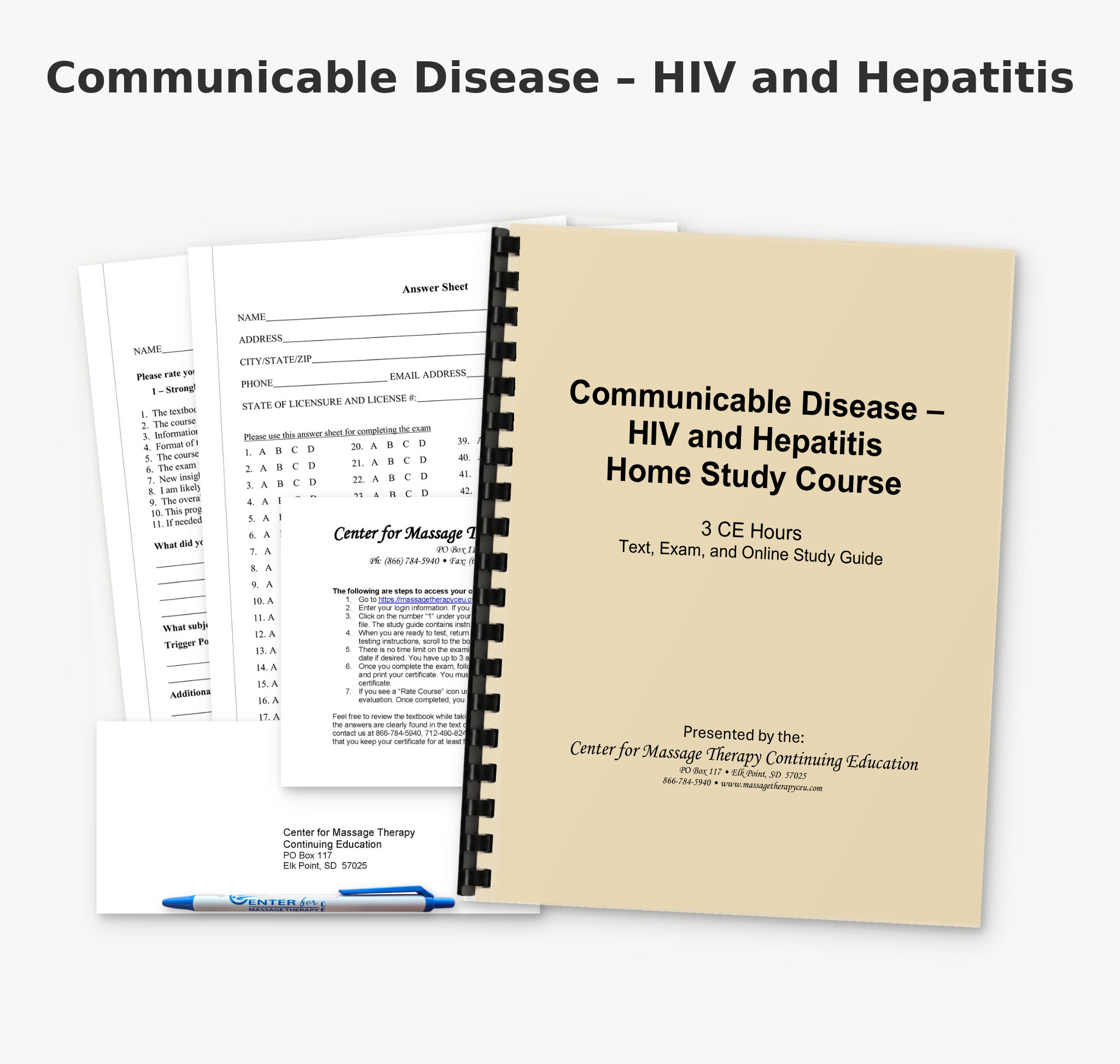
New course! Understanding communicable diseases is essential to providing safe, informed, and professional massage therapy care. This course explores HIV and hepatitis A, B, C, D, and E, including how these infections affect the body, how they are transmitted, and the precautions massage therapists should follow to protect themselves and their clients.
Emphasizing practical application, this course examines infection prevention, standard precautions, contraindications, and appropriate massage modifications for clients living with HIV or hepatitis. Massage therapists will also learn how to recognize situations requiring medical referral, respond to potential occupational exposures, and maintain respectful communication, confidentiality, and professional boundaries.
In This Course, You Will Learn:
- The differences between HIV, AIDS, and the five types of viral hepatitis.
- How communicable diseases are transmitted and how to reduce exposure risks.
- Standard precautions, hand hygiene, and infection control procedures for massage therapy settings.
- How HIV and hepatitis may affect a client's health and massage treatment considerations.
- When to modify, postpone, or avoid massage and recommend medical evaluation.
- How to respond appropriately to accidental blood or body fluid exposures.
- The importance of informed consent, confidentiality, and non-discriminatory client care.
Why Take This Course?
Massage therapists work with clients who have a wide range of health conditions, making a solid understanding of communicable diseases an important part of responsible practice. This course provides practical knowledge to help therapists distinguish actual transmission risks from common misconceptions, maintain a safer treatment environment, and make informed decisions about client care.
By completing this course, you will strengthen your ability to work confidently and respectfully with clients living with HIV or hepatitis. You'll gain valuable skills in infection prevention, treatment adaptation, and professional communication while reinforcing your commitment to safe, ethical, and client-centered massage therapy.
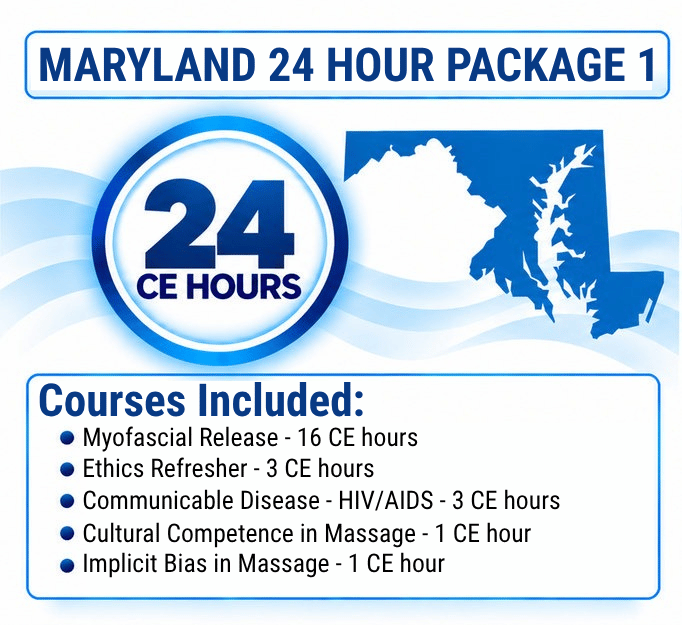
This course is accepted by the Maryland State Board of Massage Therapy Examiners and fulfills Maryland's 3 CE hour requirement for communicable disease education.
The Center for Massage Therapy Continuing Education, LLC is an Approved Provider through the National Certification Board for Therapeutic Massage and Bodywork (NCBTMB); Approved Provider number 409296-00.
Our massage online continuing education courses are also accepted by the American Massage Therapy Association (AMTA), Associated Bodywork and Massage Professionals (ABMP), and most state boards.
For more information on individual state requirements and approvals, please visit our Approvals page and click on your state.
Hepatitis A is primarily associated with which transmission pattern?
a. Mosquito bites
b. Breathing air in the same room
c. Touching intact skin during ordinary massage
d. Ingestion of material contaminated with infected feces
A stable client living with HIV has intact skin and no relevant restrictions. How should gloves be selected for routine massage?
a. They are mandatory for all contact because of the diagnosis
b. They replace hand hygiene
c. They are used only if the client supplies proof of detectable virus
d. They are selected according to anticipated contact and task-related indications
A client has reduced sensation in the feet. Which adaptation is most appropriate?
a. Apply stronger pressure until the client feels pain
b. Use hotter stones to compensate for reduced sensation
c. Assume that absence of pain guarantees safe pressure
d. Use conservative contact and avoid heat where temperature feedback is unreliable