
Massage Therapy Session Frequency: How Often?
Massage Therapy Session Frequency: How Often Should Clients Schedule a Massage?
How often should someone receive massage therapy? It is a common question among clients, but there is no universal answer. Some individuals enjoy weekly appointments, while others schedule massage monthly or only when they experience discomfort. The most appropriate massage therapy session frequency depends on several factors, including the client's goals, physical demands, health history, personal preferences, and response to previous treatments. For massage therapists, recommending appointment frequency involves understanding why the client is seeking massage, evaluating whether previous sessions have been beneficial, and recognizing when treatment recommendations should change. An individualized approach helps therapists provide professional guidance while respecting each client's circumstances and decisions.
Why Massage Therapy Session Frequency Varies
Massage therapy serves different purposes for different clients. Someone seeking relaxation may have very different scheduling preferences than a client experiencing recurring muscle tension or an athlete managing the physical demands of training. For example, an office worker experiencing occasional shoulder tension may find that monthly massage fits their wellness routine, while someone whose occupation involves repetitive physical activity may prefer appointments every two weeks. Neither schedule is inherently better because the value of massage depends on the individual's goals, response, and experience.
The duration of benefits also varies considerably. Some clients report feeling more comfortable for several weeks following a session, while others experience shorter periods of relief. These differences may reflect occupational demands, daily activities, stress, sleep, underlying health concerns, or other circumstances that massage alone cannot address. Rather than automatically recommending more frequent appointments when discomfort returns, therapists should consider whether the current approach is producing meaningful benefits and whether other factors deserve attention.
Factors That Influence How Often Clients Should Receive Massage
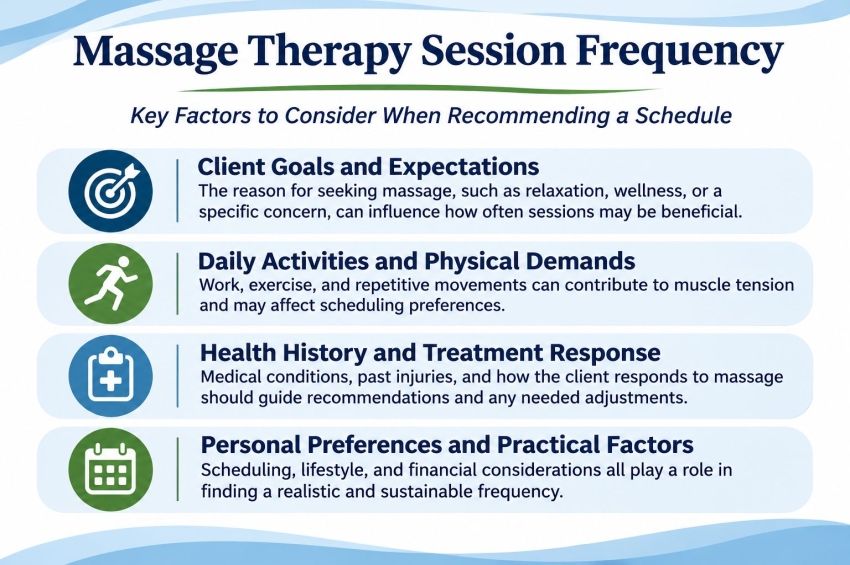
Several considerations can help massage therapists make appropriate scheduling recommendations. These factors should be evaluated together rather than used individually to determine a fixed treatment schedule.
Client Goals and Expectations
The client's primary reason for seeking massage provides an important starting point. Relaxation clients may schedule appointments according to personal preference, while those seeking assistance with recurring discomfort may benefit from a more structured approach that includes periodic reassessment. Understanding what the client hopes to accomplish also helps the therapist distinguish between appointments intended for general wellness and those focused on a particular concern. During the initial consultation or subsequent visits, therapists can ask questions such as:
- What would you most like to accomplish through massage?
- How did you feel after your previous appointment?
- How long did the benefits seem to last?
- Have your symptoms or daily activities changed?
- How often would you realistically prefer to schedule massage?
These questions encourage clients to participate in decisions about their care while helping the therapist establish reasonable expectations. A client who simply enjoys relaxation may not need a structured schedule, while someone seeking assistance with recurring discomfort may benefit from periodically evaluating whether the chosen appointment interval remains helpful.
Daily Activities and Physical Demands
Occupational responsibilities, recreational activities, and repetitive movements can influence a client's experience of muscular discomfort. Individuals who spend long hours sitting, standing, lifting, or performing physically demanding tasks may report recurring tension that affects their massage preferences. However, physical activity alone does not establish a need for frequent treatment. A client experiencing neck discomfort during computer work, for example, may also benefit from examining workstation ergonomics or incorporating movement breaks. Massage may be one component of a broader approach rather than the only response to recurring discomfort. Therapists should consider how the client's daily activities relate to their reported concerns without assuming that a demanding occupation automatically requires weekly massage.
Health History and Treatment Response
A client's health history and response to previous sessions should influence scheduling decisions. Certain medical conditions, recent injuries, unexplained symptoms, or changes in physical function may require additional precautions or evaluation by another healthcare professional. Therapists should pay attention to whether clients experience sustained improvement, temporary relief, or unwanted effects following treatment. If discomfort repeatedly returns without meaningful progress, simply increasing massage frequency may not be appropriate. The treatment approach may need modification, or the client may benefit from further evaluation. Understanding the professional scope of practice for massage therapists is essential when deciding whether to continue treatment, modify the approach, or recommend a referral. Personal preferences, financial circumstances, and scheduling limitations should also be considered, since even a potentially beneficial appointment schedule must remain practical and acceptable to the client.
Massage Frequency for Relaxation and General Wellness
For clients seeking relaxation, stress reduction, or general wellness, massage frequency is primarily a personal choice. Some individuals incorporate massage into a weekly self-care routine, while others schedule appointments every four to six weeks or during particularly stressful periods. There is no universally established schedule demonstrating that weekly massage is necessary for wellness or that monthly appointments provide the ideal benefits. Preferences may change depending on stress levels, lifestyle, available time, and financial considerations. For example, a client may choose more frequent sessions during a demanding work period and return to occasional appointments when their schedule becomes less stressful.
Therapists can help clients identify a comfortable schedule without suggesting that a particular frequency is required to maintain their health. A client who enjoys monthly massage may find that the routine provides a valuable opportunity to relax, while another may prefer occasional appointments without maintaining a standing schedule. Both approaches can be reasonable when they reflect the client's preferences and circumstances. The therapist's role is to provide an appropriate service, communicate realistic expectations, and allow the client to decide how massage fits into their overall wellness routine.
Massage Frequency for Recurring Muscle Tension
Clients experiencing recurring muscle tension often ask whether weekly or biweekly massage would be more beneficial. Although either schedule may be appropriate for some individuals, recommendations should reflect the client's response rather than a predetermined treatment formula. Consider a client who reports recurring neck and shoulder tension associated with prolonged desk work. If massage provides noticeable comfort for approximately two weeks, the therapist and client might discuss scheduling another appointment around that interval and evaluating whether the approach remains helpful. A limited trial of regularly spaced appointments can provide useful information without creating an expectation that frequent treatment must continue indefinitely.
During subsequent visits, the therapist can ask whether discomfort has changed, whether improvements last longer, and whether daily activities have become easier. If the client continues experiencing the same symptoms despite repeated sessions, increasing appointment frequency is not automatically the best solution. Modifying the massage approach, discussing contributing activities, or recommending evaluation by another qualified healthcare professional may be more appropriate, particularly when symptoms persist or worsen. The goal is to determine whether massage continues to provide meaningful benefits rather than maintaining appointments simply because discomfort returns.
Massage Frequency for Athletes and Active Clients
Athletes and physically active individuals may schedule massage around training cycles, competitions, or recovery periods. However, there is no single massage frequency that has been established as optimal for athletic performance or recovery. A recreational runner may prefer occasional massage for relaxation or perceived muscle soreness, while a competitive athlete may incorporate sessions more regularly into a broader recovery routine. Scheduling preferences may also change as training intensity increases or decreases, making flexibility especially important when working with active clients.
Massage therapists should consider the athlete's activities, treatment goals, and individual response rather than assuming that frequent exercise requires frequent massage. Research suggests massage may help reduce perceived muscle soreness in some circumstances, but evidence does not establish that a particular schedule prevents injuries or consistently improves athletic performance. Athletes experiencing persistent pain, significant functional limitations, or symptoms suggesting an injury should be encouraged to seek appropriate professional evaluation rather than relying on increasingly frequent massage sessions.
How to Know Whether a Massage Schedule Is Working
Once a client establishes a preferred appointment interval, periodic reassessment helps determine whether the schedule continues to meet their needs. This does not require an elaborate evaluation process. A brief discussion at the beginning of each session can reveal whether the client's experience has changed and whether adjustments may be appropriate. Rather than focusing exclusively on how the client feels immediately after massage, therapists should also consider what happens between appointments and whether the reported benefits are meaningful in everyday life. Recording these observations through consistent SOAP notes for massage therapists can help track client progress and support future treatment decisions.
Useful indicators include:
- Comfort: Has the client's reported muscular discomfort changed?
- Duration of benefits: How long do improvements seem to last?
- Daily function: Are usual activities becoming easier or more comfortable?
- Movement: Does the client notice changes in ease of movement?
- Satisfaction: Does the current schedule feel beneficial and worthwhile?
- New concerns: Have health circumstances, symptoms, or goals changed?
For example, a client who initially scheduled weekly massage may eventually report feeling comfortable for several weeks between appointments. This may be an opportunity to discuss extending the interval. Conversely, a client who experiences no meaningful improvement after repeated sessions may benefit from reconsidering the treatment approach. Documenting relevant observations and client feedback can help therapists recognize patterns over time and support more informed scheduling discussions. Developing an individualized approach to ongoing care is also an important part of massage therapy treatment planning. The purpose of reassessment is to determine whether massage continues to provide appropriate benefits, not simply to justify additional appointments.
When Should Massage Therapists Recommend Less Frequent Sessions?
Massage therapists should recognize when a client may benefit from extending the time between appointments. Improvements in comfort, sustained benefits, changing treatment goals, or personal preferences may all support reducing session frequency. A client who originally preferred weekly appointments may transition to biweekly or monthly massage as their circumstances change, while another may decide that occasional sessions are sufficient for their wellness goals. These adjustments should be viewed as a normal part of individualized care rather than an indication that the original treatment schedule was inappropriate.
Recommending fewer appointments when appropriate demonstrates that the therapist is prioritizing the client's needs rather than the number of visits scheduled. This approach can strengthen professional trust and encourage clients to view massage therapy as an individualized service rather than an obligation. Therapists should also recognize when continuing massage is no longer appropriate, particularly when symptoms worsen, unusual reactions occur, or further medical evaluation is needed. Professional judgment includes knowing when to adjust treatment, extend appointment intervals, or recommend additional healthcare guidance.
Communicating Massage Frequency Recommendations Professionally
Clients often appreciate guidance about when to schedule their next appointment, but recommendations should be explained without creating unnecessary pressure. Rather than telling every client they must return weekly or monthly, therapists can describe how a suggested interval relates to the client's reported experience. For example, a therapist might explain that because the client reported approximately two weeks of improved comfort following their previous appointment, scheduling another session around that time could provide an opportunity to evaluate whether the pattern continues. This gives the client a practical recommendation while making it clear that the interval is flexible.
Similarly, a client who reports sustained benefits may be encouraged to consider longer intervals if they prefer. These conversations allow therapists to share professional observations while leaving the final decision with the client. Massage therapists should avoid guaranteeing outcomes, implying that missed appointments will cause harm, or presenting prepaid treatment packages as medically necessary without appropriate justification. Clear communication supports informed decisions, realistic expectations, and a professional relationship built on trust rather than pressure.
Common Mistakes When Recommending Massage Frequency
One common mistake is applying the same appointment schedule to every client. Although a standard recommendation may be convenient, it does not account for differences in health history, goals, response, or personal circumstances. Another mistake is assuming that temporary relief automatically means more frequent massage is needed. When symptoms repeatedly return, therapists should reconsider whether the existing approach is effective rather than simply shortening the time between appointments. Recommendations should be based on observable or reported benefits and reviewed as the client's circumstances change.
Other practices to avoid include:
- Promising that a specific number of sessions will eliminate discomfort.
- Recommending frequent appointments without reassessing progress.
- Overlooking changes in health history or symptoms.
- Pressuring clients to purchase packages or maintain standing appointments.
- Continuing the same treatment approach despite a lack of meaningful improvement.
Avoiding these practices helps therapists maintain appropriate professional boundaries while supporting individualized care. Thoughtful scheduling recommendations should reflect the client's needs, treatment response, and preferences rather than relying on a predetermined number of visits.
Frequently Asked Questions About Massage Therapy Frequency
Is weekly or monthly massage better?
Neither frequency is universally better. Weekly massage may suit some clients' preferences or short-term goals, while monthly massage may fit another client's wellness routine. The most appropriate interval depends on individual circumstances, treatment response, and whether the schedule remains beneficial and practical.
How often should someone get a massage for muscle tension?
There is no established schedule that works for everyone. Therapists should consider the client's symptoms, activities, health history, and response to previous sessions when discussing appointment frequency. Persistent or worsening discomfort may require further evaluation rather than additional massage appointments.
Can someone receive massage too frequently?
Yes. More frequent massage is not necessarily more beneficial, and some individuals may experience soreness, sensitivity, or other unwanted effects. Frequency should reflect the client's tolerance, treatment intensity, health considerations, and goals rather than the assumption that more appointments produce better results.
Should massage frequency change over time?
Yes. As clients' goals, activities, and physical conditions change, their preferred appointment intervals may also change. Periodic reassessment helps determine whether sessions should become more frequent, less frequent, or remain the same, allowing massage recommendations to evolve with the client's needs.
Continuing Education and Individualized Massage Care
Making thoughtful recommendations about massage therapy session frequency requires professional judgment, effective communication, and an understanding of individual treatment responses. Continuing education can help massage therapists strengthen their assessment skills, explore evidence-informed practices, and develop approaches that support individualized client care. Learning to recognize changes in client response, communicate realistic expectations, and make appropriate adjustments can contribute to more effective professional decision-making.
The Center for Massage Therapy Continuing Education offers more than 125 massage therapy continuing education courses covering massage techniques, ethics, professional development, and other topics relevant to practicing therapists. With flexible online and home-study options, massage therapists can continue developing their professional knowledge while working toward applicable continuing education requirements.
Explore our massage therapy continuing education courses to find learning opportunities that support your professional goals.
Final Thoughts
The appropriate massage therapy session frequency depends on the individual rather than a universal scheduling formula. Weekly appointments may suit some clients, while others prefer monthly or occasional massage based on their goals, response, and circumstances. A schedule that works well initially may also need to change as the client's needs evolve.
By considering client preferences, evaluating treatment outcomes, and adjusting recommendations when appropriate, massage therapists can provide responsible guidance that supports individualized care and long-term professional trust. The goal is not to encourage the greatest number of appointments, but to help each client make informed decisions about when massage therapy may be beneficial.