
Massage Therapy Assessment: What to Check Before Treatment
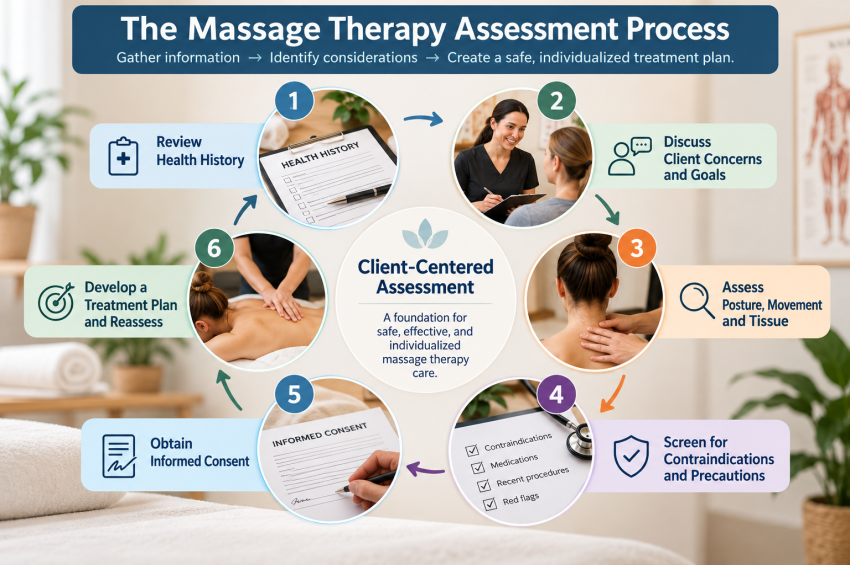
Massage Therapy Assessment: What Should a Massage Therapist Assess Before Treatment?
A thorough massage therapy assessment is an important part of providing safe, individualized, and effective client care. Before beginning a massage session, therapists need to understand the client's health history, current concerns, treatment goals, and any factors that may influence the techniques, pressure, positioning, or overall approach used during treatment. This process helps massage therapists make informed decisions while respecting professional boundaries and scope-of-practice requirements.
Massage therapy assessment involves more than asking where a client feels discomfort. It includes gathering relevant information, observing movement and posture when appropriate, identifying potential contraindications, discussing treatment preferences, and obtaining informed consent. By developing a consistent approach to assessment, massage therapists can better adapt their services to individual needs and recognize situations in which treatment should be modified, postponed, or referred to another healthcare professional.

What Is a Massage Therapy Assessment?
A massage therapy assessment is the process of collecting and evaluating information relevant to a client's massage treatment. Its purpose is to help the therapist determine whether massage is appropriate, identify precautions, understand the client's goals, and develop an individualized treatment plan.
Assessment may involve reviewing a health history form, asking questions about current symptoms, observing posture or movement, performing appropriate palpation, and discussing the client's previous experiences with massage therapy. The specific assessment methods used depend on the therapist's training, the practice setting, applicable state regulations, and the client's presenting concerns.
Massage therapy assessment is not the same as medical diagnosis. Understanding the professional boundaries of assessment is an important part of a massage therapist's scope of practice. Although therapists may recognize patterns of muscle tension, movement limitations, or other findings relevant to massage, they must avoid diagnosing medical conditions unless separately authorized to do so. The therapist's responsibility is to interpret information within the scope of massage therapy practice and recognize when another healthcare professional should evaluate a concern.
A comprehensive assessment does not necessarily require an extensive physical examination. For a routine relaxation massage, a brief review of relevant health information and treatment preferences may be sufficient. A client presenting with persistent discomfort, a recent injury, or a complex medical history may require a more detailed discussion and additional precautions before treatment begins.
Why Is Assessment Important Before Massage Therapy?
Pre-treatment assessment supports several aspects of professional massage therapy practice. It helps therapists identify potential safety concerns, select appropriate techniques, establish realistic treatment goals, and communicate effectively with clients. One of its most important purposes is determining whether massage therapy can be provided safely. Certain medical conditions, symptoms, medications, and recent procedures may affect the appropriateness of massage or require modifications. Without reviewing relevant information, a therapist may overlook factors that influence treatment decisions.
Assessment also helps individualize massage therapy. Two clients may both report shoulder discomfort but have different health histories, activity levels, symptoms, and goals. One may seek relaxation after prolonged desk work, while another may be recovering from an injury under medical care. These situations may call for different treatment approaches, even when the general area of concern is similar.
A consistent assessment process can also improve continuity of care. By recording relevant findings and comparing them with information from previous appointments, massage therapists can monitor changes in client-reported symptoms, functional abilities, and treatment responses.
1. Reviewing the Client's Health History
Reviewing the client's health history is one of the first steps in massage therapy assessment. A health history form provides background information that may affect treatment safety, positioning, pressure, and technique selection.
The therapist should review the information with the client rather than assuming that a completed form contains everything necessary for treatment planning. Clients may misunderstand questions, forget relevant details, or experience changes in their health between appointments. Important areas of health history may include:
- Current medical conditions and relevant previous diagnoses.
- Recent injuries, surgeries, or medical procedures.
- Medications that may influence massage treatment.
- Allergies and sensitivities, including reactions to massage products.
- Circulatory, neurological, musculoskeletal, or skin-related concerns.
- Pregnancy or other circumstances requiring positioning or treatment modifications.
- Previous experiences with massage therapy.
- Current symptoms and changes in health since the last appointment.
The therapist should collect information relevant to providing safe and appropriate massage rather than requesting unnecessary personal medical details. Health information should be handled confidentially and maintained according to applicable privacy and recordkeeping requirements.
Assessing Medications and Their Potential Effects
Medication history can be particularly important because some medications influence tissue sensitivity, bruising risk, blood pressure, alertness, or the client's ability to accurately perceive discomfort. Understanding how medications may influence massage treatment is an important part of clinical decision-making. Massage therapists interested in exploring this subject further can review our Massage and Pharmacology continuing education course.
For example, a client taking anticoagulant medication may have an increased risk of bruising or bleeding. A therapist should consider this when selecting pressure and techniques, particularly if the client has additional risk factors. Medications that alter pain perception, cause dizziness, or affect blood pressure may also influence treatment decisions.
Massage therapists do not need to interpret medications as a prescribing professional would. However, they should understand relevant safety considerations, ask appropriate questions, and seek additional guidance or refer when necessary.
2. Identifying the Client's Primary Concerns and Goals
Understanding why the client is seeking massage therapy helps guide assessment and treatment planning. Some clients schedule appointments primarily for relaxation or stress management, while others seek assistance with muscle discomfort, movement-related concerns, or general wellness. Rather than assuming that every client wants the same outcome, the therapist should ask what the client hopes to accomplish during the session. Useful questions include:
- What brings you in for massage today?
- Are there specific areas you would like addressed or avoided?
- When did your current discomfort or concern begin?
- Have your symptoms changed recently?
- Are there activities that make the discomfort better or worse?
- What would you consider a successful outcome from today's session?
These questions encourage client participation and help establish realistic goals. For example, a client experiencing recurring neck discomfort may identify improved comfort while working at a computer as a primary goal. Another client may simply want a relaxing massage without focused work on a particular area. Both goals are appropriate, but they influence how the therapist plans and evaluates the session.
Goals should remain consistent with what massage therapy can reasonably provide. Therapists should avoid guaranteeing specific results or promising to correct medical conditions.
3. Assessing Pain and Discomfort
When a client reports pain or discomfort, the therapist should gather enough information to determine whether massage is appropriate and how treatment may need to be adapted. Pain is a complex experience influenced by biological, psychological, and social factors. The intensity of pain does not always correspond directly to the degree of tissue damage, and a client's symptoms cannot reliably be explained by muscle tension or posture alone. Assessment should focus on the client's description of the symptoms, their effect on daily activities, and whether any concerning features are present.
Location, Onset, and Duration
The therapist may ask where the discomfort occurs, when it began, whether it developed gradually or suddenly, and whether it is constant or intermittent. It can also be helpful to ask whether the discomfort remains in one area or travels to another region. These questions provide context without requiring the massage therapist to determine a medical diagnosis.
Intensity and Quality
A numerical rating scale, such as 0 to 10, may help the client communicate the intensity of their discomfort. The therapist can also ask the client to describe the sensation using their own words, such as aching, burning, throbbing, or sharp. These descriptions should be documented as client-reported information rather than treated as proof of a specific underlying condition.
Functional Limitations
Pain assessment becomes more useful when it includes questions about everyday activities. A client may report difficulty reaching overhead, turning their head while driving, standing for extended periods, or sleeping comfortably.
Identifying functional concerns allows the therapist to discuss meaningful goals and monitor changes over time. For example, the client may report improved comfort during a particular activity following several massage sessions, even when a numerical pain rating changes only slightly.
4. Observing Posture and Body Positioning
Postural observation may be included in a massage therapy assessment when it is relevant to the client's concerns and within the therapist's training. The therapist may observe how the client stands, sits, walks, or positions the body during movement. These observations can provide information about comfort, movement preferences, and potential positioning needs during treatment. Therapists interested in developing their observation and assessment skills may benefit from additional education in postural assessment and functional anatomy.
However, posture should not be interpreted as a direct explanation for pain or dysfunction. Research has not established a simple, consistent relationship between any single posture and the presence of musculoskeletal pain. Normal variations in posture are common, and a position that appears asymmetrical is not necessarily abnormal or harmful. The purpose of postural observation is therefore to gather relevant information rather than identify supposed structural defects.
For example, if a client reports discomfort when lying face down, the therapist may consider additional bolstering, side-lying positioning, or a different treatment position. This is a practical application of assessment that directly improves client comfort.
5. Assessing Range of Motion and Movement
Movement assessment can help massage therapists understand how a client moves, identify activities that cause discomfort, and establish functional goals. Depending on training and applicable regulations, a therapist may observe active range of motion, in which the client independently moves a body part through a comfortable range. Some therapists may also be trained to perform additional movement assessments, provided these fall within their authorized scope of practice. For example, a client reporting neck stiffness may be asked to gently turn the head from side to side. The therapist may observe differences in movement or ask whether a particular direction causes discomfort.
Movement assessment should be performed cautiously and should not force the client through painful ranges. When symptoms are unexplained, severe, or accompanied by concerning neurological or other findings, referral may be more appropriate than continued physical assessment.
Active and Passive Range of Motion
Active range of motion involves movement performed by the client without assistance. It may provide information about movement tolerance, comfort, and functional limitations.
Passive range of motion involves movement performed by another person while the client remains relaxed. This type of assessment requires appropriate training and should only be used when permitted within the therapist's scope of practice.
Massage therapists should not assume that restricted movement identifies a particular injury or medical condition. Movement findings should be considered alongside the client's reported symptoms, health history, and treatment goals.
6. Using Palpation Appropriately
Palpation involves using touch to gather information about tissues and structures relevant to massage therapy. It may help therapists identify areas of reported tenderness, differences in tissue firmness, or client responses to pressure. Palpation should be performed with the client's informed consent and with attention to comfort, professional boundaries, and appropriate draping.
During palpation, the therapist may notice differences in tissue texture, temperature, or sensitivity. However, the interpretation of these findings requires caution. Palpation alone cannot reliably establish the presence of specific pathological conditions, and some commonly used palpatory assessments have limitations in reliability between practitioners. For example, a therapist may document that a client reports tenderness during palpation of the upper trapezius region. This is more precise than claiming that palpation identified a particular injury or the definitive source of the client's pain. The therapist should use palpation findings as one component of assessment rather than as the sole basis for treatment decisions.
7. Screening for Contraindications and Precautions
Identifying contraindications and precautions is one of the most important safety-related components of massage therapy assessment. A contraindication is a circumstance in which a particular treatment or technique should not be performed because of potential risk. Some situations may require postponing massage entirely, while others may only require avoiding a specific area, modifying pressure, changing positioning, or obtaining additional healthcare guidance. Examples of concerns that may affect massage treatment include:
- Suspected deep vein thrombosis or other serious circulatory concerns.
- Acute injury or significant unexplained swelling.
- Active contagious skin conditions affecting the treatment area.
- Open wounds, burns, or compromised skin.
- Recent surgery or medical procedures.
- Unexplained severe pain or new neurological symptoms.
- Medical conditions that increase bruising, bleeding, or tissue injury risk.
The presence of a medical diagnosis does not automatically mean massage therapy is contraindicated. Treatment decisions depend on the individual's current condition, symptoms, relevant risks, and the nature of the proposed massage. For example, a client with a history of cancer may be able to receive appropriately adapted massage, while someone experiencing a new, unexplained, painful swelling may require medical evaluation before treatment proceeds. Massage therapists should avoid relying on broad assumptions and instead evaluate the specific circumstances of each client.
For a more detailed discussion of conditions and circumstances that may require massage to be avoided or modified, read our article, Massage Therapy Contraindications: When Should Massage Be Avoided?
Recognizing Red Flags
Certain symptoms may indicate a potentially serious medical concern requiring prompt evaluation rather than massage therapy. Examples include sudden severe headache, new weakness or numbness, unexplained chest pain, difficulty breathing, or symptoms suggestive of a blood clot. Sudden neurological symptoms, chest pain, or significant breathing difficulty may require emergency medical assistance. When a client presents with concerning symptoms, the therapist should prioritize safety and appropriate referral rather than attempting to determine the medical cause.
8. Considering Client Comfort, Sensory Needs, and Communication
Assessment should include more than physical symptoms and medical history. Client comfort, communication preferences, sensory sensitivities, and personal boundaries can significantly influence the massage experience. Some clients may prefer minimal conversation, reduced lighting, quieter music, or particular draping arrangements. Others may need additional explanation before receiving touch or may prefer frequent opportunities to provide feedback.
The therapist should avoid assuming that all clients respond to the treatment environment in the same way. Questions about preferred pressure, temperature, positioning, communication, and areas to avoid can help create a more individualized session. Therapists should also remain attentive to nonverbal signs of discomfort without assuming that these signs replace direct communication.
A client may appear physically relaxed while still feeling uncomfortable with a technique or treatment area. Checking in appropriately and maintaining clear consent throughout the session are therefore essential.
9. Obtaining Informed Consent Before Treatment
Informed consent is an ongoing process that begins before massage therapy and continues throughout the appointment. Clear explanations, appropriate boundaries, and ongoing communication are important elements of ethical massage therapy practice. These skills are explored further in our Ethics: Professional Communication continuing education course.
Before treatment, the therapist should explain the proposed approach in language the client can understand. This may include discussing treatment areas, general techniques, expected pressure, positioning, draping, and any relevant risks or alternatives.
The client should have an opportunity to ask questions, request modifications, decline specific techniques, or stop treatment. Consent should be voluntary and specific enough for the proposed treatment. A signed intake or consent form does not replace ongoing communication, and consent for one technique or body region should not automatically be interpreted as permission for every other technique or region.
For example, a client who agrees to a back massage has not necessarily consented to treatment of the gluteal muscles or other sensitive areas. The therapist must follow applicable professional standards and state-specific consent and draping requirements. Respecting client autonomy supports ethical practice and helps establish clear professional expectations.
10. Developing an Individualized Massage Treatment Plan
Once relevant information has been collected, the therapist can use the assessment to develop a treatment plan appropriate to the client's goals, preferences, and circumstances. A treatment plan does not need to be complicated. It should identify the general focus of the session, the techniques or approaches being considered, any necessary precautions, and how the therapist will evaluate the client's response.
For example, a client seeking relief from perceived shoulder tension may benefit from a massage session focused on the upper back and shoulder regions, with pressure adjusted according to comfort. A client with a recent injury may require a more conservative approach, avoidance of certain areas, or medical evaluation before treatment.
Treatment planning should remain flexible. If the client reports discomfort during a technique, the therapist should modify or discontinue that technique rather than continue simply because it was included in the original plan. A treatment plan should also reflect realistic expectations. Massage therapy may support relaxation, comfort, and certain functional outcomes, but results vary, and no particular response should be guaranteed.
11. Reassessing During and After Massage Therapy
Assessment does not end when the massage session begins. Ongoing communication and observation help the therapist determine whether the selected approach remains appropriate. During treatment, the therapist should monitor client feedback, comfort, and any unexpected reactions. Changes in symptoms, increased discomfort, dizziness, or other concerning responses may require modifications or discontinuation of treatment.
After the session, a brief reassessment may help determine whether the client's immediate goals were addressed. For example, a therapist may ask whether the client notices a change in shoulder comfort or whether a previously uncomfortable movement feels different. When appropriate, a movement or symptom rating used before treatment may be repeated afterward.
Immediate changes should be interpreted cautiously. A client reporting reduced discomfort after one session does not necessarily establish a lasting effect or identify the mechanism responsible for the change. Over multiple appointments, reassessment can help determine whether the treatment approach remains useful and whether the client's goals should be revised.
12. Documenting Massage Therapy Assessment Findings
Accurate documentation helps preserve the information gathered during assessment and supports continuity of care. Massage therapists should record relevant health history updates, client concerns, assessment observations, precautions, treatment modifications, and responses to massage. Documentation should be clear, factual, respectful, and consistent with applicable requirements.
The SOAP note format is one commonly used approach. It organizes documentation into Subjective, Objective, Assessment, and Plan sections, allowing therapists to distinguish client-reported information from observations and professional interpretations. For example, a therapist might document that a client reported shoulder discomfort after prolonged computer use, demonstrated comfortable but somewhat limited active neck rotation, received modified massage to the upper back and shoulders, and reported improved comfort afterward.
Documentation should avoid unsupported diagnoses, exaggerated treatment claims, and unnecessary personal information. For a detailed explanation of recordkeeping methods, see our Resource Center article, SOAP Notes for Massage Therapists: A Complete Guide to Documentation.
Practical Massage Therapy Pre-Treatment Assessment Checklist
A consistent assessment routine can help massage therapists gather important information without making the intake process unnecessarily complicated. Before beginning treatment, consider the following checklist:
Health and Safety
- Review relevant health history and recent changes.
- Ask about new injuries, procedures, or medical concerns.
- Review medications when relevant to massage safety.
- Identify potential contraindications and precautions.
- Determine whether additional healthcare evaluation is necessary.
Client Concerns and Goals
- Identify the primary reason for the appointment.
- Discuss current symptoms and functional concerns.
- Clarify the client's expectations and treatment preferences.
- Identify areas the client wants addressed or avoided.
Physical and Functional Assessment
- Observe movement or posture when appropriate.
- Perform relevant assessments within professional scope.
- Use palpation only when appropriate and with consent.
- Consider positioning, mobility, and comfort needs.
Treatment Planning and Consent
- Discuss the proposed treatment approach.
- Explain relevant modifications or precautions.
- Confirm client understanding and informed consent.
- Establish a plan for communication during treatment.
- Document relevant findings and treatment decisions.
Not every item will require an extensive discussion during every appointment. The assessment should be proportionate to the client's presentation and the services being provided.
Common Mistakes During Massage Therapy Assessment
One common mistake is relying entirely on a completed intake form without discussing important information with the client. Written forms are useful, but they may not capture recent health changes, new symptoms, or concerns the client did not initially consider relevant.
Another mistake is assuming that pain or discomfort always originates from the muscles or tissues being touched. Pain can have multiple contributing factors, and the location of symptoms does not necessarily identify their cause. Therapists should avoid drawing conclusions that exceed the information available.
Some therapists may also place too much emphasis on postural asymmetries or palpatory findings while overlooking the client's functional goals and reported experience. An assessment is most useful when it combines relevant observations with the client's perspective rather than treating one finding as definitive.
Finally, failing to reassess or update treatment plans can limit the value of the initial assessment. Client needs change over time, and an approach that was appropriate during one appointment may need modification during another.
Frequently Asked Questions About Massage Therapy Assessment
Do massage therapists need to perform an assessment before every session?
Massage therapists should review relevant client information before each session, including changes in health status, symptoms, and treatment goals. The depth of assessment may vary depending on the client and practice setting. A returning client seeking routine relaxation may need a brief update, while a client with new symptoms may require more extensive assessment.
Can massage therapists perform orthopedic assessments?
The answer depends on the therapist's training, applicable licensing laws, and authorized scope of practice. Some jurisdictions permit certain assessment procedures, while others place limitations on specific tests or techniques. Massage therapists should verify their state's requirements and avoid using assessment findings to make medical diagnoses outside their authority.
Can massage therapists diagnose muscle injuries?
Massage therapy assessment does not automatically authorize medical diagnosis. Therapists may document client-reported symptoms and observations relevant to massage, but diagnosing injuries or medical conditions requires appropriate professional authority.
What should a massage therapist do if a client reports unexplained pain?
The therapist should gather relevant information about the symptoms and consider whether massage is appropriate. New, severe, progressive, or otherwise concerning symptoms may warrant medical evaluation before treatment. Emergency warning signs require prompt emergency assistance.
Is postural assessment necessary for every massage client?
No. Postural observation may be useful when relevant to the client's concerns, but it is not necessary for every massage session. Therapists should avoid interpreting normal postural variations as evidence of dysfunction or assuming that posture alone explains pain.
How does massage therapy assessment differ from treatment planning?
Assessment involves gathering and interpreting information relevant to the client's needs and safety. Treatment planning uses that information to select an appropriate approach, establish goals, identify precautions, and determine how progress will be evaluated. The two processes are closely connected but serve different purposes.
Should massage therapists document assessment findings?
Relevant findings should be documented according to applicable laws, professional standards, and practice requirements. Consistent documentation helps maintain an accurate record of client concerns, treatment decisions, modifications, and responses.
Continuing Education and Massage Therapy Assessment Skills
Assessment is closely connected to several areas of professional massage therapy continuing education, including anatomy, kinesiology, pathology, ethics, clinical reasoning, communication, and documentation.
Massage therapy continuing education can help practitioners strengthen their understanding of these subjects and apply assessment principles more consistently in professional practice. Courses such as Functional Anatomy and Advanced Palpation, Orthopedic Massage, and Postural Assessment provide opportunities to expand knowledge of anatomy, movement, and assessment techniques. Therapists can also explore our complete selection of online massage CE courses to find additional professional development opportunities.
Massage continuing education also provides opportunities to review the limitations of assessment methods, recognize when referral is appropriate, and develop treatment approaches that reflect current professional knowledge.
For massage therapists seeking online massage CEUs or additional professional development, selecting courses that address assessment and treatment planning can support informed decision-making and individualized client care.
Conclusion
Massage therapy assessment is an essential part of responsible professional practice. By reviewing relevant health information, understanding client concerns, identifying potential precautions, observing movement when appropriate, and obtaining informed consent, massage therapists can develop treatment plans that reflect individual needs and professional responsibilities.
Effective assessment does not require diagnosing medical conditions or performing unnecessary tests. Its purpose is to gather meaningful information, support treatment safety, establish realistic goals, and recognize when modifications or referrals are appropriate.
A thoughtful assessment process also strengthens communication, documentation, and continuity of care. By incorporating assessment into each stage of the massage therapy session, therapists can provide more individualized services while maintaining appropriate professional boundaries and supporting client-centered care.